
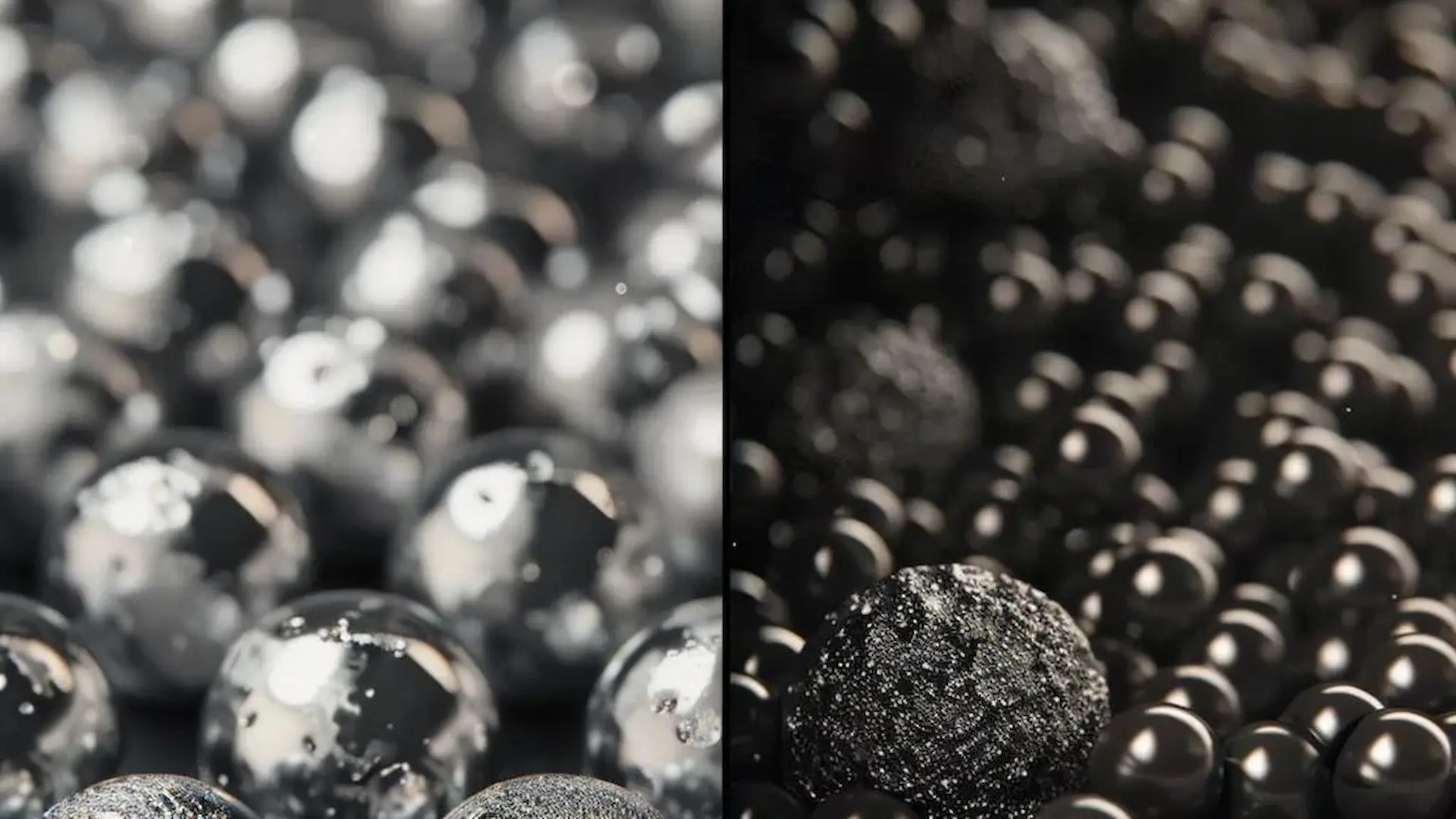
A Practical Guide for Industrial Media Selection
Selecting the appropriate grinding media plays a critical role in milling efficiency, product quality, and operating cost. Ceramic and steel grinding media differ substantially in density, hardness, wear behavior, toughness, corrosion resistance, contamination risk, and lifecycle economics. Understanding these differences allows engineers and procurement managers to align media selection with process objectives, contamination tolerance, and total cost of ownership (TCO).
This guide explains the functional properties of grinding media, compares ceramic and steel options across key performance parameters, outlines industry-specific selection criteria, and discusses real-world application considerations. The goal is to support technically sound, defensible media selection—not to promote a single universal solution.
Core Functions and Properties of Grinding Media
Grinding media are engineered spherical or cylindrical components used in ball mills, stirred media mills, and similar equipment to reduce particle size through impact and attrition. Their performance depends on a combination of mechanical and chemical properties that influence breakage efficiency, wear rate, contamination, and maintenance intervals.
Key Properties Influencing Performance
- Hardness: Resistance to abrasive wear and surface deformation
- Density: Determines collision energy and mill power draw
- Wear resistance: Affects media consumption and contamination rate
- Toughness (impact resistance): Controls resistance to fracture or chipping
- Corrosion resistance: Important in wet or chemically active environments
No single material optimizes all properties simultaneously; selection depends on process priorities and operating conditions.
Contamination and Chemical Compatibility Considerations
Grinding media wear inevitably generates debris. If this debris alters product chemistry, color, or purity, it may compromise downstream processing or regulatory compliance. Chemical compatibility between media and slurry is therefore a critical selection factor.
- Steel media may introduce iron or alloy constituents as they wear or corrode.
- Ceramic media generally produce non-metallic wear debris and are often selected where ferrous contamination must be minimized.
The acceptable level of contamination is application-specific and should be validated through testing where product sensitivity is high.
Ceramic Grinding Media: Properties and Use Cases
Ceramic grinding media are commonly selected for fine grinding and applications where contamination control is important. Their performance varies by ceramic type.
Common Ceramic Media Types
- Alumina (Al₂O₃): High hardness, moderate density, widely used for fine grinding
- Zirconia (ZrO₂): Higher density and improved toughness compared to alumina
- Silicon carbide (SiC): Very high hardness, limited use due to brittleness
- Silicon nitride (Si₃N₄): High toughness and thermal stability for niche applications
Performance Characteristics
Ceramic media typically offer:
- High resistance to abrasive wear
- Lower ferrous contamination than steel
- Stable performance in chemically aggressive slurries
However, ceramics generally have lower impact toughness than steel and may fracture if subjected to excessive impact energy. Proper mill design and operating conditions are essential to avoid premature failure.
Cost Considerations
Ceramic grinding media usually carry a higher initial cost than steel. Their economic justification depends on reduced wear rates, lower contamination-related rework, and longer replacement intervals rather than purchase price alone.
Steel Grinding Media: Properties and Use Cases
Steel grinding media remain the dominant choice for many bulk grinding applications due to their density, toughness, and cost efficiency.
Common Steel Media Types
- Carbon steel: Cost-effective for general-purpose grinding
- High-chrome steel: Improved abrasion resistance for abrasive feeds
- Stainless steel: Enhanced corrosion resistance in wet environments
Performance Characteristics
Steel media provide:
- High density (~7.8 g/cm³), delivering strong impact energy
- Excellent toughness and resistance to catastrophic fracture
- Predictable wear behavior under heavy loads
Steel is well suited for coarse grinding where throughput and robustness are prioritized over strict contamination control.
Contamination and Corrosion Risks
Steel media can oxidize or corrode in certain slurry chemistries, accelerating wear and introducing metallic debris. Stainless grades mitigate corrosion but do not eliminate metallic contamination entirely.
Comparative Overview: Ceramic vs. Steel Grinding Media
| Property | Ceramic Media | Steel Media |
|---|---|---|
| Hardness | High (material dependent) | Moderate–high |
| Density | Low–moderate (type dependent) | High |
| Wear rate | Low in suitable conditions | Low–moderate |
| Contamination risk | Low (non-ferrous) | Moderate (ferrous) |
| Impact resistance | Moderate | High |
| Corrosion resistance | Excellent | Alloy dependent |
| Typical applications | Fine, purity-sensitive milling | Coarse, high-throughput grinding |
| Initial cost | Higher | Lower |
| Lifecycle cost | Application dependent | Application dependent |
Actual performance varies with mill design, operating parameters, and feed material.
Application-Driven Media Selection
Typical Industry Preferences
- Mining and cement: Steel media for high-impact, coarse grinding
- Pharmaceuticals and fine chemicals: Ceramic media to limit metallic contamination
- Paints and coatings: Ceramic media to avoid color shift
- Advanced ceramics and electronics: Ceramic media for purity and size control
Selection should reflect contamination tolerance, desired fineness, and operating intensity rather than industry norms alone.
Environmental and Sustainability Considerations
- Longer media life reduces waste and replacement frequency
- Steel media are recyclable, supporting circular material flows
- Ceramic media generate chemically inert waste but are not typically recycled
Sustainability decisions increasingly incorporate energy consumption per ton milled, replacement frequency, and disposal requirements alongside cost.
Total Cost of Ownership (TCO)
Evaluating grinding media on purchase price alone can be misleading. TCO typically includes:
- Media unit cost
- Wear rate and replacement frequency
- Downtime for media changes
- Contamination-related rework or rejection
- Energy consumption influenced by media density and size
In contamination-sensitive processes, ceramics may reduce total cost despite higher upfront pricing. In bulk grinding, steel often remains the most economical solution.
Role of STR Industries in Media Selection
STR Industries supplies steel, ceramic, glass, and plastic grinding media and supports custom diameter and material requirements for industrial and regulated applications. The company emphasizes documented manufacturing controls, material traceability, and consultative selection support.
Rather than guaranteeing performance outcomes, STR Industries assists customers by:
- Reviewing application requirements and mill parameters
- Recommending candidate media materials and sizes
- Supporting sampling and trial validation
- Transitioning validated solutions to production supply
This approach helps customers reduce selection risk and improve process consistency.
Conclusion
Ceramic and steel grinding media serve different but complementary roles in industrial milling. Steel media excel in impact-driven, high-throughput applications where robustness and cost efficiency are paramount. Ceramic media are preferred where contamination control, chemical stability, and fine particle-size control are critical.
The optimal choice depends on process conditions, contamination tolerance, and lifecycle economics, not on material class alone. By evaluating mechanical properties, wear behavior, and total cost of ownership together, engineers can select grinding media that align with both technical requirements and business objectives.
Request for Quote