
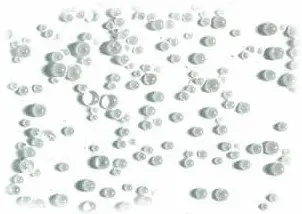
When an application runs hot, handles aggressive chemistry, or demands the purity of laboratory-grade glass, soda-lime is not enough. Borosilicate glass balls step in with low thermal expansion, strong thermal shock resistance, and excellent chemical durability. They are the standard choice for pharmaceutical processing, laboratory equipment, high-temperature valves, and precision instruments.
STR Industries manufactures borosilicate glass balls to tight tolerances for demanding applications, backed by ISO 9001 and TS 16949 certified quality systems and more than 50 years of ball manufacturing experience.
What Borosilicate Glass Is
Borosilicate glass replaces much of the soda and lime in ordinary glass with boron trioxide, roughly 13 percent by weight, alongside about 81 percent silica. That single formulation change transforms the material: the glass expands very little when heated, resists thermal shock, and stands up to acids and other aggressive chemicals far better than soda-lime glass.
Type 3.3 borosilicate, defined by ISO 3585 and classified as ASTM E438 Type I, Class A, is the standard borosilicate used in laboratory glassware, pharmaceutical packaging, and process equipment. It is the same glass family specified for borosilicate balls in regulated industries.
Key Properties
The published values below are standard for Type 3.3 borosilicate glass:
- Coefficient of thermal expansion: 3.3 x 10⁻⁶/K, roughly one third that of soda-lime glass. Dimensions stay stable across wide temperature swings.
- Density: 2.23 g/cm3, about 10 percent lighter than soda-lime glass.
- Thermal shock resistance: withstands rapid temperature changes in the range of roughly 160 to 180 C depending on test method, far beyond soda-lime glass.
- Softening point: about 820 to 825 C, versus about 720 C for soda-lime, allowing service at substantially higher temperatures.
- Chemical durability: hydrolytic Class HGB 1 under ISO 719, the highest rating, with excellent resistance to acids. The standard glass for pharmaceutical and laboratory contact.
- Hardness: Mohs 6 to 6.5, slightly harder than soda-lime glass.
- Refractive index: about 1.47, with excellent clarity for optical and sight-glass applications.
- Electrical insulation: like all glass, an excellent electrical insulator.
Soda-Lime vs Borosilicate: Which Glass Ball Do You Need
The choice comes down to operating conditions. Use this comparison to decide:
| Property | Soda-Lime Glass | Borosilicate Glass 3.3 |
|---|---|---|
| Density | About 2.5 g/cm3 | 2.23 g/cm3 |
| Thermal expansion | About 9.0 x 10⁻⁶/K | 3.3 x 10⁻⁶/K |
| Thermal shock resistance | Moderate, about 70 C | High, about 160 to 180 C |
| Chemical resistance | Good (ISO 719 Class 3) | Excellent (ISO 719 Class HGB 1) |
| Softening point | About 715 to 720 C | About 820 to 825 C |
| Hardness | Mohs about 6 | Mohs 6 to 6.5 |
| Relative cost | Lower | Higher |
Choose soda-lime when the application runs near ambient temperature with mild chemistry and cost matters most. Choose borosilicate when temperatures cycle, when the ball contacts aggressive chemicals or pharmaceutical product, or when dimensional stability across temperature swings is required. Our glass ball manufacturing page covers both materials in more detail.
Industries and Applications
- Pharmaceutical processing: balls that contact product must meet the highest chemical durability standards. Borosilicate 3.3 is the industry standard glass for pharma contact.
- Laboratory equipment: metering, dispensing, and instrument components that see repeated thermal cycling and chemical exposure.
- High-temperature valves: check and control valves in process lines where temperatures would stress ordinary glass.
- Sight glasses and flow indicators: borosilicate is the standard for chemical and pharmaceutical sight glasses, rated for service to 280 C under DIN 7080.
- Metering pumps and flow control: precise, chemically inert balls for repeatable fluid handling.
- Optical systems and sensors: clear, defect-free spheres for instruments and precision assemblies.
When Borosilicate Pays for Itself
Borosilicate balls cost more than soda-lime, so the upgrade has to earn its place. It does whenever the operating environment punishes ordinary glass: repeated steam sterilization cycles in pharmaceutical equipment, hot fluid lines that cool and reheat, chemical metering where aggressive media attack lesser glass, and any instrument where thermal drift in a critical dimension would throw off calibration. In those conditions, the failure cost of a cracked or corroded soda-lime ball dwarfs the price difference. If your application runs at ambient temperature with mild chemistry, soda-lime remains the economical and correct choice.
How Precision Borosilicate Balls Are Made
Like other precision glass balls, borosilicate balls begin as molten glass formed into spheres, then are ground and polished to final diameter, sphericity, and surface finish. The finishing step is what delivers ball-grade precision: tight diameter tolerance, verified sphericity, and a surface free of pits and defects that could trap contaminants in pharmaceutical or laboratory service.
STR Industries supplies borosilicate glass balls in sizes from 1/64 inch to 6 inches in virtually any increment, finished and inspected to your specification.
Why Buy Borosilicate Glass Balls From STR Industries
Regulated and high-temperature applications leave no room for inconsistent product. STR Industries manufactures in the United States under ISO 9001 and TS 16949 certified quality systems, with full traceability from material to finished ball. Domestic manufacturing means stable pricing regardless of tariff changes, short lead times, and direct access to the engineering team that makes your balls.
Get Borosilicate Glass Balls Made to Your Specification
Tell us your size, tolerance, and operating conditions, and we will supply borosilicate glass balls built for them. Request a quote or contact our team to discuss your application.
Also Available Under Metal Alloy Balls
- Aluminum Alloys
- Brass, Bronze & Copper Alloys
- Nickel-Based Alloys
- Titanium Alloys
- Tungsten Carbide
- Tungsten-Based Alloys
- Cobalt-Based Alloys