
Choosing the optimal grinding media can improve milling efficiency by up to 30%, minimize contamination, and extend equipment life and reduce down time. Engineers and procurement managers facing a vast array of steel, ceramic, glass, and specialty beads need a clear roadmap to match media properties with process requirements. This guide defines the main types of grinding media, outlines critical selection criteria, examines core performance properties, highlights the best options for key industries, compares steel versus ceramic advantages, and shows how STR Industries’ custom solutions can boost your milling outcomes. By the end, you will understand which media deliver the right balance of hardness, density, chemical inertness, wear life, and cost-performance for milling success.
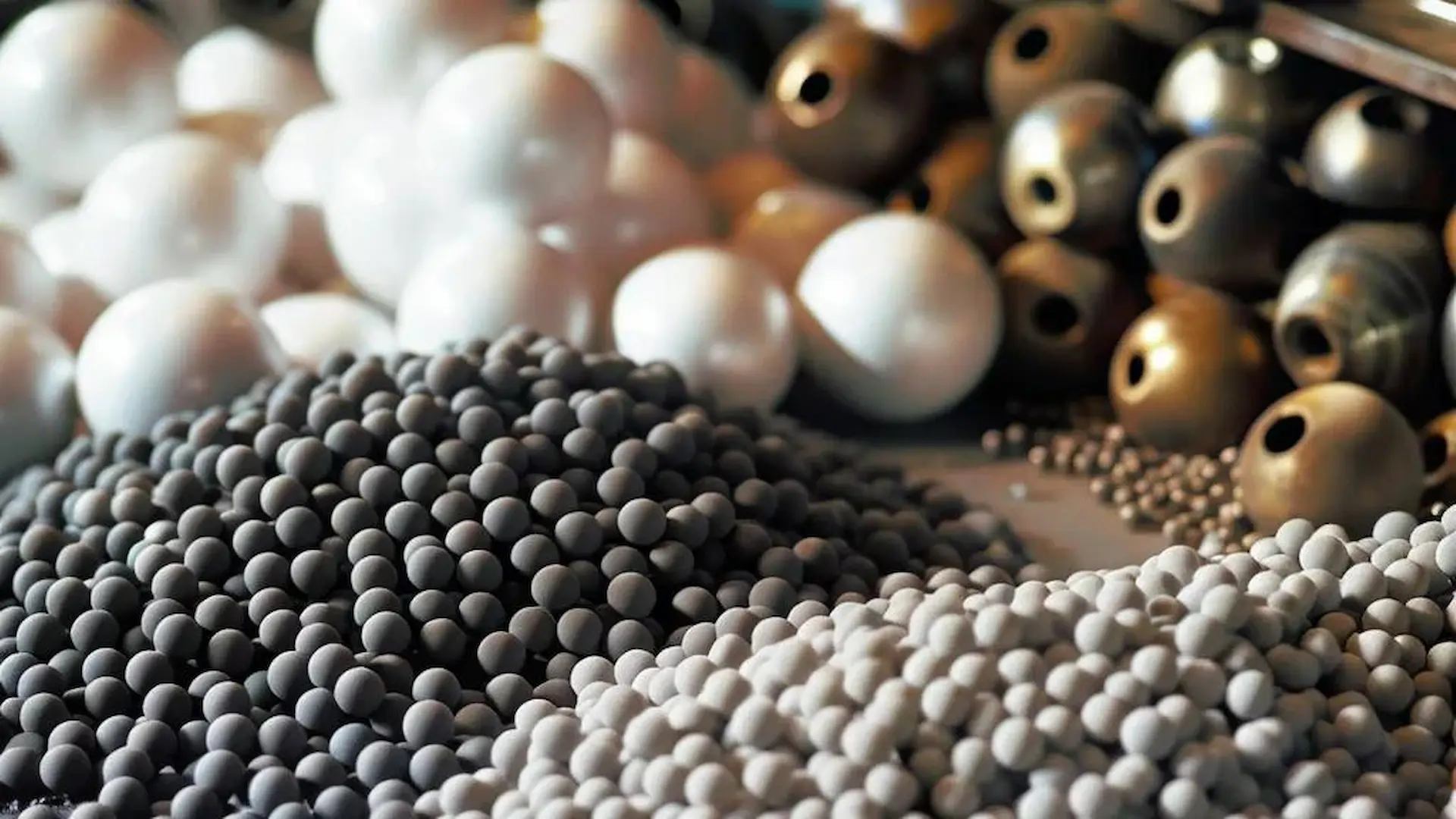
What Are the Main Types of Grinding Media for Milling?
Grinding media are solid particles used in mills to reduce material size through impact and attrition. Their shape, material, and density determine energy transfer, contamination risk, and wear life. Understanding each category ensures you deploy the right media for coarse or ultra-fine grinding in ball mills, stirred mills, or SAG mills.
What Are Steel Grinding Balls and Their Key Properties?
Steel grinding balls are high-density spheres manufactured from carbon, chrome, or stainless steel alloys to deliver robust impact energy and long wear life in heavy-duty milling.
- Density: 7.8–8.0 g/cm³ enhances impact force.
- Hardness: 60–67 HRC resists deformation.
- Corrosion Resistance: Stainless grades minimize rust in wet milling.
- Typical Applications: Mining, cement production, general industrial pulverizing.
Steel balls’ durability and cost-effectiveness make them ideal for primary and secondary grinding, and their performance in ball mills sets the baseline for comparison with other media types.
Steel Grinding Ball Properties
Steel grinding balls are favored in heavy-duty milling due to their high density and hardness, which contribute to robust impact energy and extended wear life. Stainless steel grades are often selected to minimize rust in wet milling applications, ensuring the longevity of the grinding process.
Smith, A., “Selection and Application of Grinding Media” (2022)
This research supports the article’s claims about the properties and applications of steel grinding balls.
How Do Ceramic Grinding Balls Differentiate and When Are They Used?
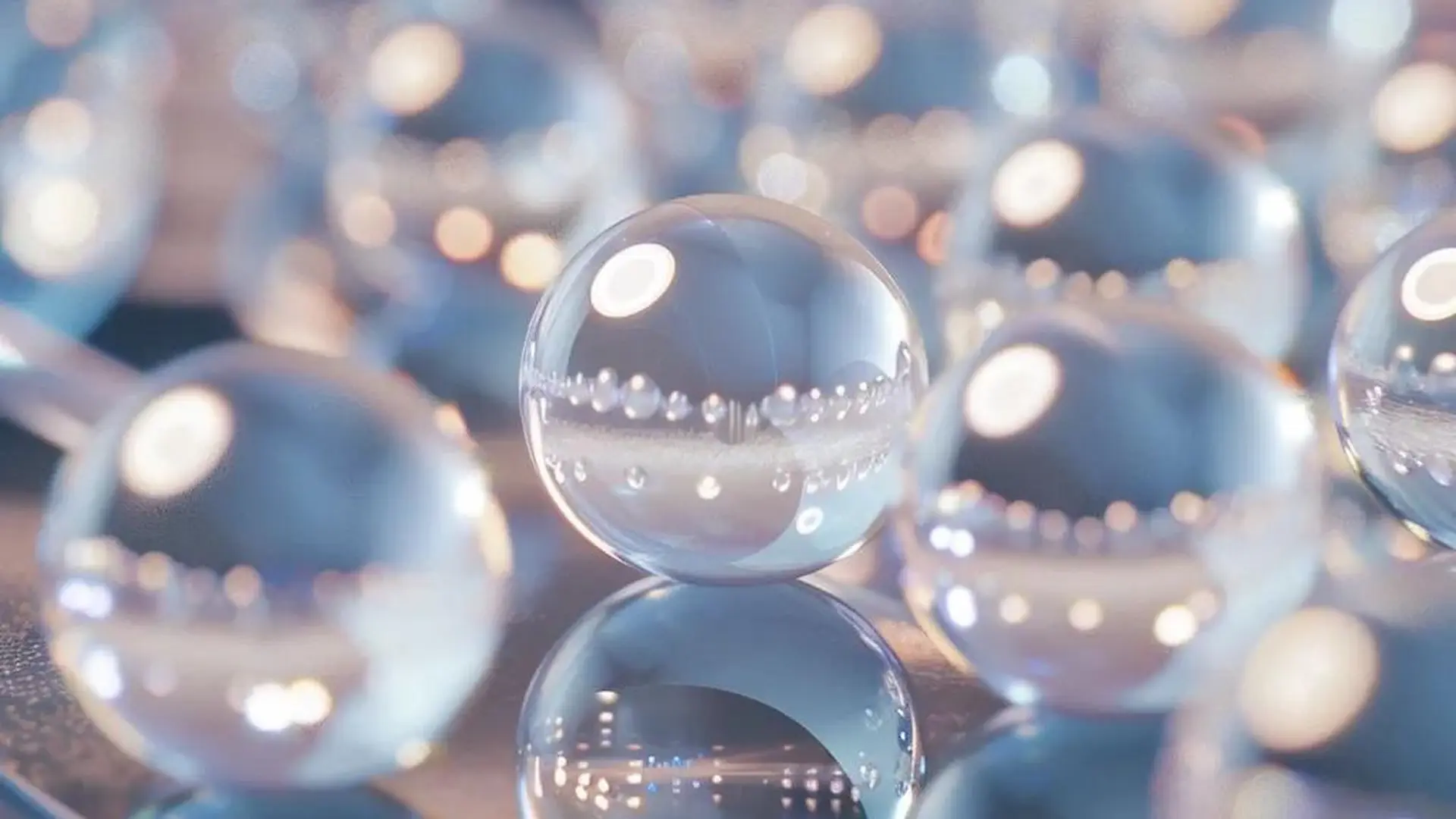
Ceramic grinding balls, made from alumina, zirconia, or silicon nitride, combine high hardness with chemical inertness to prevent product contamination and ensure minimal wear debris.
- Purity: > 99 % alumina or zirconia content.
- Hardness: 85–92 Mohs repels abrasion.
- Chemical Inertness: Ideal for pharmaceuticals, food, and paintings.
- Thermal Stability: Withstands temperatures > 1200 °C in hot milling.
When material purity and contamination control are paramount, ceramic beads maintain product integrity and extend media life in stirred media mills.
Ceramic Media in Contamination-Sensitive Applications
Ceramic grinding balls, made from materials like alumina and zirconia, are crucial in applications where product purity is paramount. Their chemical inertness prevents contamination, making them ideal for pharmaceuticals, food, and paints, where maintaining product integrity is essential.
Jones, B., “Advanced Materials for Milling Processes,” Journal of Industrial Engineering (2023)
This citation reinforces the article’s discussion on the benefits of ceramic media in specific industrial contexts.
What Are Cylpebs and How Do They Enhance Grinding Efficiency?
Cylpebs are cylindrical media with beveled ends that increase surface contact and maintain uniform grinding kinetics.
- Shape Benefit: Flat surfaces enable consistent attrition.
- Wear Uniformity: Even mass loss extends service life.
- Application Focus: Cement, fine and ultra-fine grinding.
- Efficiency Gain: 10–15 % faster particle size reduction versus spheres.
By pairing cylpebs with steel or ceramic spheres, operations can fine-tune grinding profiles and energy consumption.
What Are Glass Beads and Their Industrial Uses?
Glass beads are chemically inert, low-density media that produce ultra-pure slurries and fine dispersions.
- Material: Soda-lime or borosilicate glass.
- Density: 2.4–2.6 g/cm³ for gentle impact.
- Purity: Zero metallic contamination.
- Uses: Paints, pigments, dyes, high-end coatings.
Glass beads’ softness relative to steel and ceramic prevents overgrinding and contamination in pigment and chemical manufacturing, ensuring color consistency and product safety.
Which Specialty Grinding Media Options Are Available?
Beyond common spheres, specialty media address niche demands for density, hardness, or chemical properties:
- Stainless Steel Beads: 8.0 g/cm³ density with superior corrosion resistance.
- High-Density Tungsten Carbide: 15 g/cm³ density for ultra-fine milling.
- Silicon Carbide: Exceptional hardness (9 Mohs) for abrasive minerals.
- Natural Stones: Agate and flint for lab-scale contamination-free tests.
By selecting specialty media, engineers can meet extreme wear, density, or purity requirements that standard options cannot satisfy.
How Do You Choose the Best Grinding Media for Your Milling Application?
Selecting grinding media depends on matching material compatibility, target particle size, wear life, equipment type, and budget. A systematic evaluation of these criteria optimizes mill performance and total cost of ownership.
What Material Compatibility Factors Affect Grinding Media Selection?
Preventing product contamination requires media materials that do not react or shed impurities into the slurry. The following table outlines compatibility considerations:
| Material Being Ground | Potential Contamination | Recommended Media |
|---|---|---|
| Metal oxides and ceramics | Iron, chromium | Ceramic (alumina, ZrO₂) |
| Food and pharmaceuticals | Metal ions | Glass beads, zirconia |
| Paints and pigments | Trace metals | Borosilicate glass |
| Mineral ores | N/A | Steel (high-chrome) |
How Does Desired Particle Size Influence Media Choice?
Particle size targets determine media diameter and density:
- Coarse Grinding (D₉₀ > 100 µm): 20–30 mm steel balls for high impact.
- Intermediate Grinding (10–100 µm): 10–20 mm cylpebs or fine steel spheres.
- Ultra-fine Grinding (< 10 µm): 1–10 mm ceramic beads or tungsten carbide.
Gradual downscaling of media size boosts surface area for finer particle reduction while balancing mill speed and energy use.
Why Is Abrasion Resistance and Wear Life Critical in Media Selection?
Abrasion resistance extends media service life, reducing replacement frequency and downtime:
- High Hardness: Slows wear rate under high-pressure impact.
- Toughness: Resists cracking and fragmentation.
- Uniform Wear Profile: Ensures consistent performance over time.
Media with superior abrasion resistance maintain grinding efficiency longer, lowering total operating expenses.
How Does Milling Equipment Compatibility Impact Media Choice?
Different mill types favor specific shapes and materials. Key alignments include:
| Mill Type | Preferred Media | Key Considerations |
|---|---|---|
| Ball Mill | Steel balls, cylpebs | Impact-dominated, coarse to fine range |
| Stirred Media Mill | Ceramic beads | Attrition-focused, ultra-fine powders |
| SAG Mill | Forged steel balls | Autogenous grinding with high load |
| Vibratory Mill | Glass beads | Low-impact, uniform dispersion |
What Is the Cost versus Performance Trade-off in Grinding Media?
Balancing upfront media cost against wear life and efficiency yields true cost-effectiveness. Key factors include:
- Purchase Price: Ceramic beads cost 2–3× more than steel.
- Wear Rate: Ceramic can last 3–5× longer in sensitive applications.
- Energy Savings: Higher density media reduce milling time.
- Downtime Impact: Longer life reduces changeover intervals.
A holistic cost-performance analysis identifies the most economical option over the media lifecycle.
What Are the Key Properties That Define Grinding Media Performance?
Grinding media performance hinges on material-specific attributes that govern energy transfer, contamination risk, and operational lifespan. Four core properties shape media behavior in any milling process.
How Does Density Affect Grinding Efficiency and Media Selection?
Density (specific gravity) dictates the kinetic energy imparted during impact. Higher-density media accelerate faster and deliver greater crushing force:
- Steel Balls: 7.8 g/cm³
- Alumina Beads: 3.9 g/cm³
- Zirconia Balls: 5.6 g/cm³
- Tungsten Carbide: 15.6 g/cm³
Selecting the right density optimizes milling kinetics and energy consumption for your target particle size.
Why Is Hardness Important for Grinding Media Longevity?
Hardness measures scratch resistance and correlates to wear rate under abrasive loads. Media with high hardness withstand prolonged grinding without significant diameter loss, preserving mill performance and product consistency.
What Role Does Chemical Inertness and Purity Play in Media Choice?
Chemical inertness prevents reactions between media and slurry components, eliminating contamination and preserving product chemistry. High-purity ceramics and glass beads maintain stringent quality standards in pharmaceuticals, food, and specialty chemicals.
How Do Impact Strength and Durability Influence Media Performance?
Impact strength reflects a media’s ability to endure sudden loads without fracturing. Durable media minimize fines generation from broken particles, reducing downstream separation costs and ensuring consistent grinding results.
Which Grinding Media Are Best Suited for Specific Industrial Applications?
What Grinding Media Are Ideal for Mining and Ore Processing?
- High-Chrome Steel: Superior wear resistance in abrasive ores.
- Forged Carbon Steel: Balanced hardness and toughness for autogenous and semi-autogenous mills.
These media deliver robust grinding performance in large-scale mineral processing.
Which Media Types Optimize Cement Production Grinding?
Cement milling benefits from a blend of cylpebs and forged steel spheres:
- Cylpebs: Enhanced surface contact for consistent powder fineness.
- Forged Steel Balls: Long life and resilience under high-load conditions.
The combination ensures uniform clinker pulverization and high throughput.
What Are the Best Grinding Media for Pharmaceutical and Food Industries?
Ultra-pure alumina and zirconia beads prevent contamination and comply with strict safety standards. Their inertness and low wear rate protect active ingredients and maintain product purity in nutraceuticals and APIs.
How Are Grinding Media Used in Paint, Pigment, and Chemical Manufacturing?
Glass beads and ceramic media generate fine dispersions without introducing metal ions. Their chemical stability and uniform particle breakdown produce consistent colors and rheology in coatings and inks.
What Media Options Serve Advanced Ceramics and Aerospace Applications?
High-purity zirconia and silicon nitride balls provide extreme hardness and fracture toughness. Their performance in precision grinding yields defect-free ceramic components and aerospace-grade materials.
What Are the Advantages of Steel Grinding Media Compared to Ceramic Options?
How Does Steel Media Perform in Heavy-Duty Milling?
Steel grinding balls endure impact loads and handle large feed sizes with minimal breakage. Their cost-effectiveness and widespread availability suit primary grinding stages in mining and bulk cement operations.
Why Choose Ceramic Media for Contamination-Sensitive Applications?
Ceramic grinding balls offer unparalleled purity and chemical resistance, ensuring zero trace-metal contamination. They excel in fine and ultra-fine milling where product integrity and regulatory compliance are non-negotiable.
What Are the Wear and Longevity Differences Between Steel and Ceramic Media?
| Attribute | Steel Balls | Ceramic Balls |
|---|---|---|
| Hardness | 60–67 HRC | 85–92 Mohs |
| Wear Rate (g/kg ground) | 0.1–0.3 | 0.01–0.05 |
| Chemical Inertness | Moderate | High |
| Typical Service Life | 1–3 months | 6–12 months |
How Can Custom Grinding Media Solutions Improve Milling Efficiency?
What Precision Ball Manufacturing Services Does STR Industries Offer?
STR Industries produces steel, ceramic, and specialty beads in custom diameters from 1 mm to 50 mm, with tight tolerances (± 0.02 mm). Services include:
- Proprietary heat treatments for enhanced hardness.
- Customized alloy formulations for corrosion resistance.
- Surface-polishing options to reduce wear.
These capabilities ensure each batch meets your unique milling objectives.
How Do Custom Material Formulations Enhance Grinding Performance?
By adjusting alloy chemistry and ceramic blends, STR’s formulations improve impact strength, wear resistance, and chemical inertness. Tailored density profiles and hardness grades unlock faster throughput, longer media life, and lower maintenance costs.
When Should You Consult Engineering Experts for Media Selection?
Engage STR’s technical team when:
- Transitioning to ultra-fine or high-purity milling.
- Facing contamination or wear-life challenges.
- Optimizing energy consumption in high-tonnage operations.
Expert consultation aligns media properties with process variables to deliver measurable efficiency gains.
What Are the Most Common Questions About Grinding Media?
Industry professionals frequently seek clarity on media categories, selection methods, advantages, and equipment-specific recommendations. The following insights address top inquiries without resorting to question-and-answer lists.
What Are the Primary Types of Grinding Media?
The main categories include steel balls, ceramic balls, cylpebs, glass beads, stainless steel beads, and high-density tungsten carbide beads. Each class offers distinct density, hardness, and chemical profiles suited for different industrial milling needs.
How Do I Select the Best Grinding Media for My Milling Process?
Effective selection hinges on evaluating material compatibility, target particle size, abrasion resistance, mill type, and cost-performance trade-offs. A systematic approach ensures media match both process requirements and budget constraints.
What Are the Benefits of Ceramic Grinding Media Over Steel?
Ceramic beads deliver superior purity, minimal contamination, higher hardness, and longer wear life in sensitive applications. Steel balls remain more economical and excel under high-impact, large-feed conditions.
What Is the Best Grinding Media for Ball Mills?
Forged high-chrome steel balls and cylindrical cylpebs provide reliable performance in ball mills, balancing impact energy, wear life, and operating costs across coarse to intermediate grinding stages.
How Does Grinding Media Impact Milling Efficiency and Longevity?
Media density and hardness determine energy transfer and wear rates, while chemical inertness preserves product quality. Optimal media selection reduces mill downtime, stabilizes throughput, and extends equipment life.
Selecting the right grinding media transforms milling operations by aligning media properties with process demands. STR Industries combines deep technical expertise and precision manufacturing to deliver tailored solutions that enhance efficiency, reduce contamination, and lower total cost of ownership. Contact STR Industries today to explore custom grinding media formulations designed for your specific milling challenges.