
Selecting the optimal grinding media material hinges on understanding how steel, ceramic, and specialized media influence milling efficiency, contamination control, and total operating costs. Engineers and procurement managers often face challenges with excessive wear, unwanted impurities, or suboptimal particle size reduction that drive up downtime and replacement frequency. This guide delivers clear insights into the main grinding media types, a detailed steel-vs-ceramic performance comparison, critical selection factors, industry-specific recommendations, and emerging innovations. Along the way, you’ll discover how STR Industries custom engineering support ensure reliable, high-purity media solutions tailored to any manufacturing, pharmaceutical, or mineral-processing application.
What Are the Main Types of Grinding Media Materials?
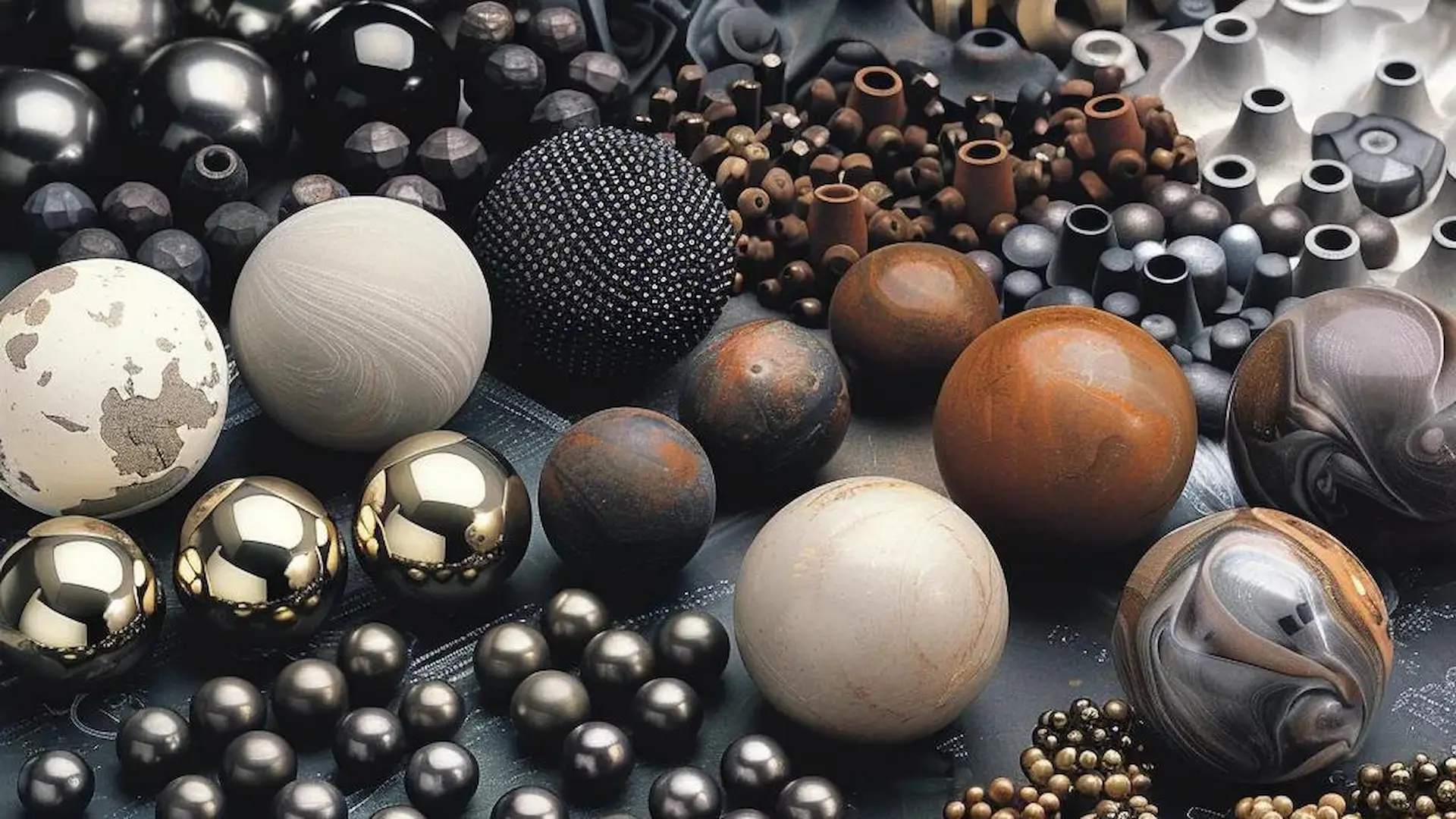
Steel, ceramic, glass, and plastic balls serve as the core categories of grinding media, each offering distinct hardness, density, wear resistance, and chemical stability. Understanding these materials’ properties sets the stage for matching media to your process demands and product quality requirements.
What Are the Main Types of Grinding Media Materials?
Which Steel Grinding Media Types Are Common and What Are Their Properties?
Steel Grinding Media Properties
Steel grinding media, including carbon, chrome, and stainless steel, are commonly used due to their impact strength and cost-effectiveness. Carbon steel offers low cost, chrome steel provides hardness and wear resistance, and stainless steel resists corrosion, making them suitable for various applications like mining and cement production.
Smith, A., “Selection and Application of Grinding Media” (2022)
This research provides a foundational understanding of the different types of steel grinding media and their specific properties, which is directly relevant to the article’s discussion of steel media.
To clarify differences across steel grades, consider the following comparison:
| Entity | Attribute | Value |
|---|---|---|
| Carbon Steel Media | Hardness | 55–60 HRC; ideal for general-purpose milling |
| Chrome Steel Media | Wear Resistance | High, with chromium content ≥12% for prolonged lifespan |
| Stainless Steel Media | Corrosion Resistance | Excellent in wet environments; minimal rust formation |
Each steel type balances cost, wear rate, and contamination risk, guiding engineers toward the most economical solution for mining, cement, or pigment applications.
What Are the Key Ceramic Grinding Media Materials and Their Advantages?
Ceramic Grinding Media Advantages
Ceramic grinding media, such as alumina, zirconia, and silicon nitride, are favored for high-purity and fine-grinding applications due to their chemical inertness and low wear loss. Alumina is cost-effective, zirconia offers toughness, and silicon nitride withstands high temperatures, making them ideal for pharmaceutical and food-grade production.
Johnson, B., “Ceramic Grinding Media: A Comprehensive Review” (2023)
This research supports the article’s claims about the advantages of ceramic grinding media, specifically highlighting their suitability for applications requiring high purity and fine grinding.
| Entity | Attribute | Value |
|---|---|---|
| Alumina Media | Purity | ≥99% Al₂O₃; suited for pigment and ceramic raw material milling |
| Zirconia Media | Toughness | Exceptional fracture resistance; yttria-stabilized grades minimize wear |
| Silicon Nitride | Thermal Stability | Maintains hardness at >1 000 °C; ideal for high-temperature processes |
Choosing the right ceramic grade ensures minimal metallic contamination and consistent particle-size distribution in pharmaceutical, food-grade, and advanced-materials production.
What Other Specialized Grinding Media Materials Exist?
Beyond steel and ceramics, glass beads, plastic (PEEK, nylon), and tungsten carbide media address niche requirements. Glass beads deliver gentle attrition for delicate dispersions, plastic media suit low-density applications like ink milling, and tungsten carbide excels in ultra-hard, precision grinding scenarios.
- Glass beads minimize contamination in optical coatings.
- Plastic media reduce mill wear when processing soft polymers.
- Tungsten carbide ensures sub-micron grinding of ultra-hard ceramics.
These alternatives fill specialized performance gaps, preparing operations for diverse throughput and product-purity demands.
How Do Steel and Ceramic Grinding Media Compare in Performance and Applications?
What Are the Wear Resistance and Contamination Risks of Steel vs. Ceramic Media?
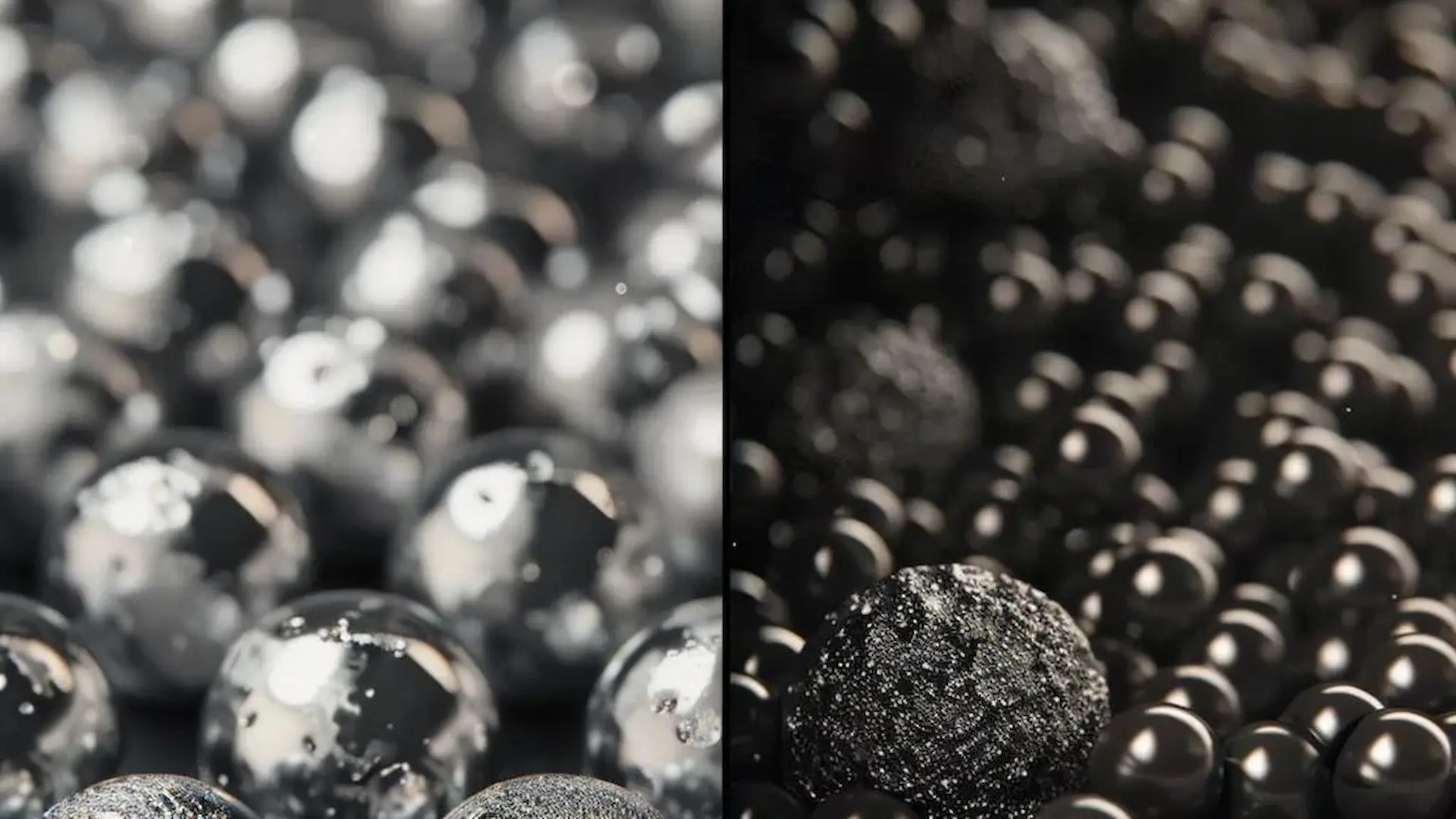
Steel media exhibit moderate wear resistance but can release iron particles into the slurry, raising contamination concerns in sensitive industries. Ceramic media deliver up to six times lower wear rates and inherently resist chemical attack, preventing cross-contamination in high-purity milling. By selecting ceramic balls for pharmaceutical and electronics applications, engineers eliminate costly downstream purification steps while maintaining acceptable media longevity.
How Do Density and Impact Strength Affect Grinding Efficiency?
With densities of 7.8 g/cm³, steel spheres impart strong impact energy for rapid coarse grinding, while alumina and zirconia, at 3.8–6.0 g/cm³, optimize attrition for fine particle-size reduction. Higher-density media shorten processing time in heavy-duty mills, whereas lower-density ceramic beads enhance surface contact and energy transfer during fine-grinding stages, delivering tighter particle distributions.
What Are the Cost and Longevity Differences Between Steel and Ceramic Media?
Initial cost per kilogram for steel balls is typically 30–50% lower than ceramic options, but higher wear rates increase replacement frequency. Ceramic media cost more upfront but extend service life by 4–8×, reducing overall lifecycle expense and energy consumption. When evaluating total cost of ownership, factoring media longevity and process efficiency often makes ceramic grinding balls the more economical choice in precision applications.
What Factors Should You Consider When Selecting Grinding Media Materials?
Selecting the right grinding media demands a holistic evaluation of material hardness, target particle size, mill type, contamination risk, and economic metrics.
How Does the Material to Be Ground Influence Media Choice?
Hard or abrasive feedstocks require high-hardness media like chrome steel or alumina, whereas soft or heat-sensitive materials benefit from plastic or glass beads. Chemical reactivity between the media and feed can alter product properties, so inert ceramics are preferred for reactive or high-purity formulations.
Why Is Desired Particle Size and Fineness Important in Media Selection?
Coarse grinding steps emphasize impact strength—favoring dense steel media—while micron-scale fineness relies on attrition from smaller ceramic beads. Target particle diameter dictates media size distribution, with finer grades requiring correspondingly smaller and harder spheres to achieve uniform sub-micron outputs.
How Do Milling Equipment and Process Type Affect Media Performance?
Ball mills running wet processes favor stainless-steel or alumina media for corrosion resistance, while dry mills operating at elevated temperatures perform better with silicon nitride or tungsten carbide. Agitation speed, load, and mill geometry influence optimum media density and hardness selection to prevent overgrinding or mill wear.
What Role Does Contamination Control and Product Purity Play?
Industries such as pharmaceuticals and food processing demand minimal metallic contaminants, making zirconia and alumina the top choice. In contrast, steel media suit applications where trace iron content is acceptable, such as bulk mineral processing. Media purity directly impacts downstream separation and quality control steps.
How Do Cost-Effectiveness and Media Longevity Impact Total Ownership?
Balancing initial media cost against wear rate and energy consumption yields the true cost of grinding operations. Longer-lasting ceramic media reduce downtime and replacement logistics, while steel spheres may lower upfront capital but incur higher maintenance expenses over time.
Which Grinding Media Materials Are Best Suited for Specific Industrial Applications?
What Grinding Media Are Ideal for Mining and Mineral Processing?
High-carbon and chrome steel balls provide the density and impact energy required to fracture hard ores and minerals. Their durability and low unit cost make them standard in mining, cement, and aggregate industries where particle-size targets are in the coarse to medium range.
How Are Ceramic and Zirconia Media Used in Pharmaceuticals and Food Industries?
Zirconia beads, stabilized with yttria or ceria, deliver ultra-low wear loss and complete chemical inertness essential for grinding active pharmaceutical ingredients and food flavor compounds. Alumina media also support high-purity dispersions when trace metal contamination must be strictly prevented.
What Media Types Are Recommended for Ceramics, Paints, and Coatings?
Alumina grinding balls offer superior hardness and abrasion resistance for fine milling of ceramic glazes, pigments, inks, and coating additives. Silicon nitride is deployed when thermal stability and minimal wheel wear are critical during high-speed dry grinding of advanced ceramic powders.
How Does STR Industries Provide Custom Grinding Media Solutions and Technical Support?
What Custom Precision Balls and Media Options Does STR Industries Offer?
STR Industries manufactures precision balls from 0.8 mm to 80 mm in carbon, chrome, stainless steel, alumina, zirconia, silicon nitride, PEEK, and glass. Customers benefit from tailored size distributions, material grades, and batch certifications to match exact process specifications.
How Does STR Industries Ensure Quality and Durability in Grinding Media?
Adhering to TS 16949 standards, STR Industries conducts diamond-grinding, tight-tolerance metrology, and statistical process control to guarantee uniform hardness, sphericity, and wear performance. Comprehensive lot test reports validate each batch’s compliance with specified material and dimensional properties.
How Can Customers Benefit from STR Industries’ Consultation and Engineering Expertise?
Free consultations leverage STR’s team of mechanical, ceramic, and process engineers to optimize media selection, milling parameters, and contamination control strategies. The interactive Grinding Media Selector Tool on strindustries.com guides users through material, mill type, and fineness criteria to recommend ideal media solutions.
What Are the Latest Trends and Innovations in Grinding Media Materials?
How Are Advanced Ceramics Like Yttria-Stabilized Zirconia Improving Grinding Efficiency?
Yttria-stabilized zirconia beads combine unmatched wear resistance with fracture toughness, reducing media consumption and batch-to-batch variability. Their high density and energy transfer efficiency accelerate fine-grinding cycles while preventing metal contamination in ultra-pure applications.
Case Study: How Zirconia Media Reduced Contamination in Pharmaceutical Milling
A pharmaceutical manufacturer replaced alumina beads with yttria-stabilized zirconia, cutting wear loss by 85% and eliminating iron impurities in the final API, boosting product yield and meeting stringent regulatory limits.
What Are the Developments in Wear-Resistant Steel Grinding Media?
High-chromium and martensitic steel formulations extend media life by up to 60% in heavy-duty mineral processing. Improved metallurgy and heat-treatment protocols deliver elevated hardness without sacrificing toughness, enabling longer intervals between media replacements.
How Does Grinding Media Choice Affect Energy Consumption and Operational Costs?
Optimal media materials and size distributions reduce over-milling and recirculation loads, lowering mill power draw by up to 15%. By selecting the correct density and hardness profile for each process stage, operations achieve significant savings in energy usage and maintenance expenditures.
What Are Common Questions About Grinding Media Materials?
What Are the Different Types of Grinding Media and Their Uses?
Grinding media fall into steel (carbon, chrome, stainless), ceramics (alumina, zirconia, silicon nitride), glass, plastic, and tungsten carbide categories. Each type suits specific hardness, density, and chemical-purity requirements across mining, paint, pharmaceutical, and ceramics industries.
How Do I Choose the Right Grinding Media for My Application?
Evaluate the material hardness, target particle-size reduction, mill type (wet or dry), contamination tolerance, and cost-of-ownership to identify the optimal media material and size distribution. Consulting process engineers and leveraging selection tools ensures the best performance and longevity.
What Are the Benefits of Zirconia Grinding Media Compared to Others?
Zirconia media offer exceptional wear resistance, high density for efficient impact, and complete inertness, resulting in minimal contamination and extended media life—especially crucial in high-purity milling of pharmaceuticals, ceramics, and advanced materials.
What Materials Are Grinding Balls Made Of?
Grinding balls are manufactured from high-carbon and chrome steels, stainless alloys, alumina, yttria-stabilized zirconia, silicon nitride, PEEK, and glass, each chosen for its hardness, density, corrosion resistance, and chemical stability to match diverse milling processes.
Selecting the correct grinding media material dramatically influences grind efficiency, purity, and cost. By leveraging in-depth comparisons, performance insights, and STR Industries’ TS 16949-certified precision balls alongside expert consultation, operations achieve optimal milling outcomes and long-term savings. Explore our custom solutions and request a free media-selection consultation at https://strindustries.com/request-quote/ to take your grinding process to the next level.