
High-density grinding media plays a crucial role in various industrial applications, particularly in milling and grinding processes. Selecting the right type of grinding media can significantly impact efficiency, durability, and overall operational costs. This article delves into the different types of high-density grinding media, their properties, and how to choose the best options for your specific needs. By understanding the characteristics of materials like chrome steel, ceramic, and forged steel, you can make informed decisions that enhance your production processes. We will explore key factors such as density, hardness, and size, as well as the importance of abrasion resistance and application-specific solutions. Additionally, we will highlight how engineering project support can optimize your grinding media selection.
What Are the Key Types of High-Density Grinding Balls?
High-density grinding balls are essential components in various milling applications, and they come in several types, each with unique properties and advantages. The primary types include chrome steel, ceramic, and forged steel grinding balls. Understanding the differences among these materials is vital for selecting the right grinding media for your specific application.
How Do Chrome Steel, Ceramic, and Forged Steel Grinding Balls Compare?
Chrome steel grinding balls are known for their superior hardness and wear resistance, making them ideal for high-impact applications. They typically have a hardness rating of around 58-65 HRC, which allows them to withstand significant wear and tear. Ceramic grinding balls, on the other hand, offer excellent chemical resistance and are less likely to contaminate materials during grinding. They are often used in industries where purity is critical, such as pharmaceuticals and food processing. Forged steel grinding balls provide a balance between cost and performance, offering good hardness and impact resistance at a lower price point compared to chrome steel.
Studies on chrome steel further elaborate on its robust characteristics, confirming its high hardness and resistance to abrasive wear.
Chrome Steel Grinding Media: Wear & Hardness
Abrasive wear tests used a free ball microabrasion tester to evaluate the wear rate of the counterbody before chromium plating, the wear rate of the counterbody did not change significantly. The tests were performed on a cold rolling mill roll (Chrome steel, 0.82%C, 3.5% Cr), with final hardness of 60 HRC.
Influence of surface texturing and hard chromium coating on the wear of steels used in cold rolling mill rolls, JDB De Mello, 2013
What Are the Material Properties That Affect Grinding Media Performance?
The performance of grinding media is influenced by several material properties, including hardness, density, and wear resistance. Hardness is crucial as it determines the media’s ability to withstand impact and abrasion during grinding. Density affects the media’s mass and, consequently, its grinding efficiency. Higher density materials tend to provide better grinding performance due to their ability to generate more force. Additionally, wear resistance is vital for prolonging the lifespan of grinding media, reducing the frequency of replacements and associated costs.
Understanding these fundamental properties is crucial, as detailed research often investigates how microstructure, hardness, abrasion, and impact toughness collectively influence grinding media wear.
Grinding Media Properties: Hardness, Abrasion, & Toughness
This paper aims to understand grinding media wear as a function of microstructure, hardness, abrasion and impact toughness of grinding media from eight different manufacturing sources. Results will be presented for 125 mm diameter media.
How to Select Grinding Media Based on Density, Hardness, and Size?
Selecting the appropriate grinding media involves considering various factors, including density, hardness, and size. Each of these factors plays a critical role in optimizing milling efficiency and achieving desired outcomes.
Further emphasizing the complexity of this decision, research highlights the critical impact of media size and properties on overall milling efficiency and product quality.
High-Density Grinding Media Selection: Size, Properties & Efficiency
The effect of media size and properties on milling efficiency, media consumption and product quality is critical for any grinding application. Recent developments in high density media have further complicated the selection of grinding media.
Effect of media size and mechanical properties on milling efficiency and media consumption, 2011
What Are the High-Density Grinding Media Selection Criteria for Optimal Milling Efficiency?
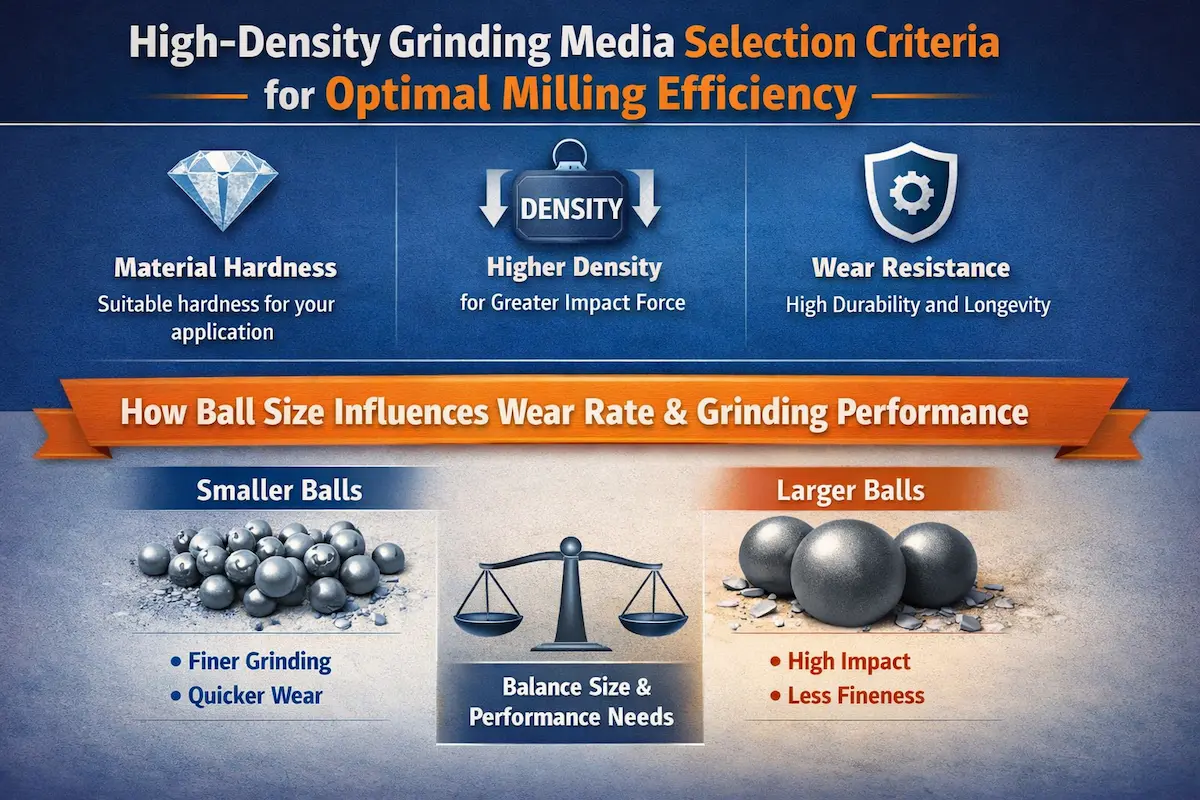
When selecting grinding media, consider the following criteria:
- Material Hardness: Choose media with hardness levels suitable for your specific application to minimize wear and maximize efficiency.
- Density: Higher density media can enhance grinding performance by providing greater impact force.
- Wear Resistance: Select materials that offer high wear resistance to extend the lifespan of the grinding media and reduce replacement costs.
How Does Grinding Ball Size Influence Wear Rate and Grinding Performance?
The size of grinding balls significantly influences both wear rate and grinding performance. Smaller balls tend to provide finer grinding, as they can penetrate more easily into the material being processed. However, they may also wear out faster due to increased surface area exposure. Conversely, larger balls can handle higher impact forces and are more durable, but they may not achieve the same level of fineness in grinding. Therefore, selecting the optimal size involves balancing these trade-offs based on the specific requirements of your milling operation.
Why Is Abrasion Resistance Critical for High-Density Grinding Media Durability?
Abrasion resistance is a key factor in determining the durability of grinding media. Materials with high abrasion resistance can withstand the wear and tear associated with grinding processes, leading to longer service life and reduced operational costs.
How Do Different Materials Affect Abrasion Resistance and Wear Rates?
Different materials exhibit varying levels of abrasion resistance. For instance, tungsten carbide grinding media is known for its exceptional wear resistance, making it suitable for high-stress applications. In contrast, standard steel media may wear out more quickly under similar conditions. Understanding these differences helps in selecting the right material for specific applications, ensuring optimal performance and cost-effectiveness.
What Are the Latest Industry Insights on Wear Rate Comparisons?
Recent studies indicate that wear rates can vary significantly between different types of grinding media. For example, chrome steel balls may have a wear rate ranging from approximately 0.3 to 0.6 grams per hour depending on conditions, while ceramic balls can have a wear rate as low as 0.05 to 0.2 grams per hour. These insights highlight the importance of selecting the right media to minimize wear and enhance overall efficiency in milling operations.
Which Application-Specific Grinding Media Solutions Best Fit Your Industry?
Different industries have unique requirements for grinding media, and selecting the right type can lead to improved performance and cost savings.
What High-Density Grinding Media Are Recommended for Mining, Cement, and Chemical Processing?
For mining applications, chrome steel grinding balls are often recommended due to their hardness and durability. In cement production, forged steel balls are commonly used for their balance of cost and performance. For chemical processing, ceramic grinding media is preferred to prevent contamination and ensure product purity.
How Do Customized Grinding Media Solutions Enhance Project Outcomes?
Customized grinding media solutions can significantly enhance project outcomes by tailoring the media to specific operational needs. For instance, STR Industries offers engineering project support to help clients select the most suitable grinding media based on their unique requirements. This tailored approach can lead to improved efficiency, reduced costs, and better overall performance in milling operations.
How Can Engineering Project Support Improve Your High-Density Grinding Media Selection?
Engineering project support plays a vital role in optimizing high-density grinding media selection. By leveraging expert knowledge and experience, companies can make informed decisions that enhance their milling processes.
What Customization Options Does STR Industries Offer for High-Density Grinding Media?
STR Industries specializes in manufacturing and supplying high-density grinding media, focusing on materials such as chrome steel that offer superior hardness and wear resistance. They provide tailored solutions to manufacturing professionals and engineers seeking optimized grinding media for efficiency and durability. Customization options include specific sizes, shapes, and material compositions to meet the unique needs of various applications.
How Does Engineering Consultation Lead to Cost and Efficiency Gains?
Engineering consultation can lead to significant cost and efficiency gains by ensuring that the selected grinding media aligns with operational goals. By analyzing factors such as material characteristics and processing requirements, companies can optimize their media selection, resulting in reduced wear rates, lower replacement costs, and improved overall productivity.
What Are the Latest Trends and Innovations in High-Density Grinding Media?
The field of high-density grinding media is continually evolving, with new materials and technologies emerging to enhance performance and sustainability.
How Is Sustainable Manufacturing Influencing High-Density Grinding Media Development?
Sustainable manufacturing practices are increasingly influencing the development of high-density grinding media. Companies are exploring eco-friendly materials and production methods that minimize environmental impact while maintaining performance standards. This trend is driving innovation in the industry, leading to the creation of more sustainable grinding media options.
What Emerging Materials and Standards Are Shaping the Market?
Emerging materials such as advanced ceramics and composites are shaping the grinding media market by offering improved performance characteristics. Additionally, new industry standards are being established to ensure quality and consistency in grinding media production, further enhancing the reliability of these essential components in milling operations.