
Choosing between chrome steel and carbon steel is a key decision for construction and manufacturing projects. Each alloy brings distinct characteristics that affect durability, performance, and cost. This article breaks down their compositions, mechanical behavior, and typical applications so you can match material to requirement.
You’ll get practical insight into how these steels behave in service—covering heat treatment, corrosion resistance, and maintenance strategies that extend life. By the end, you’ll be better equipped to pick the steel that fits your project goals.
What Are the Fundamental Differences Between Each Type of Steel?
Chrome steel and carbon steel are primarily distinguished by their alloying content and resulting properties. Chrome steel includes chromium, which increases hardness, wear resistance, and corrosion resistance. Carbon steel’s properties are driven by carbon content and are generally more malleable and cost-effective.
Chromium enhances strength and environmental resistance in chrome steel, making it suitable for higher-performance and harsher environments. Recognizing these core differences is essential for selecting the right material for a given use.
How Do Material Compositions Define Chrome Steel and Carbon Steel Properties?
Composition directly determines performance. Chrome steel commonly contains about 0.5% to 1.5% chromium, which boosts hardness and corrosion resistance. Carbon steel contains roughly 0.05% to 2.0% carbon and is categorized as low, medium, or high carbon steel.
As carbon content rises, hardness and strength increase but ductility declines, making the steel more brittle. These elemental variations also affect wear resistance and surface behavior.
Carbon & Chromium Effects on Steel Wear Resistance
This study examined how carbon and chromium influence wear resistance and surface roughness in five high-speed steel rolls made by centrifugal casting. Wear resistance improved with higher carbon because more carbides formed. Increasing chromium produced M7C3 carbides that yielded lower surface roughness and more uniform wear.
Raising chromium to encourage M7C3 carbide formation can improve wear resistance while keeping surface roughness low.
What Are the Standard Classifications and Alloy Types for Each Steel?
Chrome and carbon steels are classified by composition and intended use.
Steel Classifications: Chrome vs. Carbon
| Category | Classification | Description & Key Characteristics | Typical Applications |
| Chrome Steel | High Carbon Chrome Steel | Elevated carbon and chromium for maximum hardness and wear resistance. | Bearings, cutting tools, and high-performance automotive parts. |
| Low Carbon Chrome Steel | Lower carbon content for improved ductility and formability. | Components requiring a balance of corrosion resistance and shaping flexibility. | |
| Carbon Steel | Low Carbon Steel | Up to approximately 0.3% carbon; focuses on formability. | Automotive body panels and parts requiring significant shaping. |
| Medium Carbon Steel | Approximately 0.3%–0.6% carbon; a compromise of strength and ductility. | Structural components and general machinery. | |
| High Carbon Steel | Approximately 0.6%–2.0% carbon; prioritized for high strength and hardness. | Tools, cutting edges, and high-strength industrial components. |
Understanding these categories helps you target the right grade for performance and fabrication needs.
How Do Mechanical Properties Affect the Durability of Each types of Steel?
Mechanical properties—tensile strength, hardness, ductility—drive durability. Chrome steel typically exhibits higher tensile strength and hardness because of chromium, which helps it resist deformation under load.
Carbon steel’s behavior depends on carbon level: low carbon grades are ductile and energy-absorbing, while high carbon grades are harder but more brittle.
What Are the Tensile Strength and Hardness Characteristics of Each Steel Type?
Tensile strength and hardness are key indicators of suitability for specific applications.
| Steel Type | Tensile Strength | Hardness |
|---|---|---|
| Chrome Steel | Ranges from 700 to 1,200 MPa, depending on alloy. | Up to 61 HRC, suitable for high-wear uses. |
| Carbon Steel | Varies widely; low carbon around 370 MPa, high carbon exceeds 1,000 MPa. | Low carbon: 120-180 HB; high carbon: up to 65 HRC. |
These performance ranges explain why chrome steel is often selected for high-wear, high-performance components.
How Does Heat Treatment Enhance Steel Durability and Performance?
Heat treatment alters microstructure via controlled heating and quenching to improve durability and properties. In chrome steel, heat treatments raise hardness and tensile strength, enhancing wear resistance.
For carbon steel, appropriate heat treatment can increase toughness and ductility, improving impact resistance and reducing the risk of fracture.
What Is the Role of Corrosion Resistance in Comparing Carbon and Chrome Steel Durability?
Corrosion resistance is a major factor in long-term durability. Chromium in chrome steel forms a passive oxide layer that helps resist rust and corrosion, making it a better choice for outdoor, marine, or chemically aggressive environments.
Carbon steel is more susceptible to corrosion and typically requires coatings, platings, or regular maintenance to protect against rust in humid or saline conditions.
Chromium Content & Stainless Steel Corrosion Resistance
Stainless steels are widely applied in aerospace, automotive, and food processing for their high corrosion resistance and mechanical integrity. That resistance stems from chromium levels above ~11.5%, which form a chromium-rich oxide film. Many stainless grades keep carbon low, which limits hardness and wear resistance and can reduce service life in highly abrasive applications.
Reference: Wear resistance of an additively manufactured high-carbon martensitic stainless steel, E Iakovakis, 2022
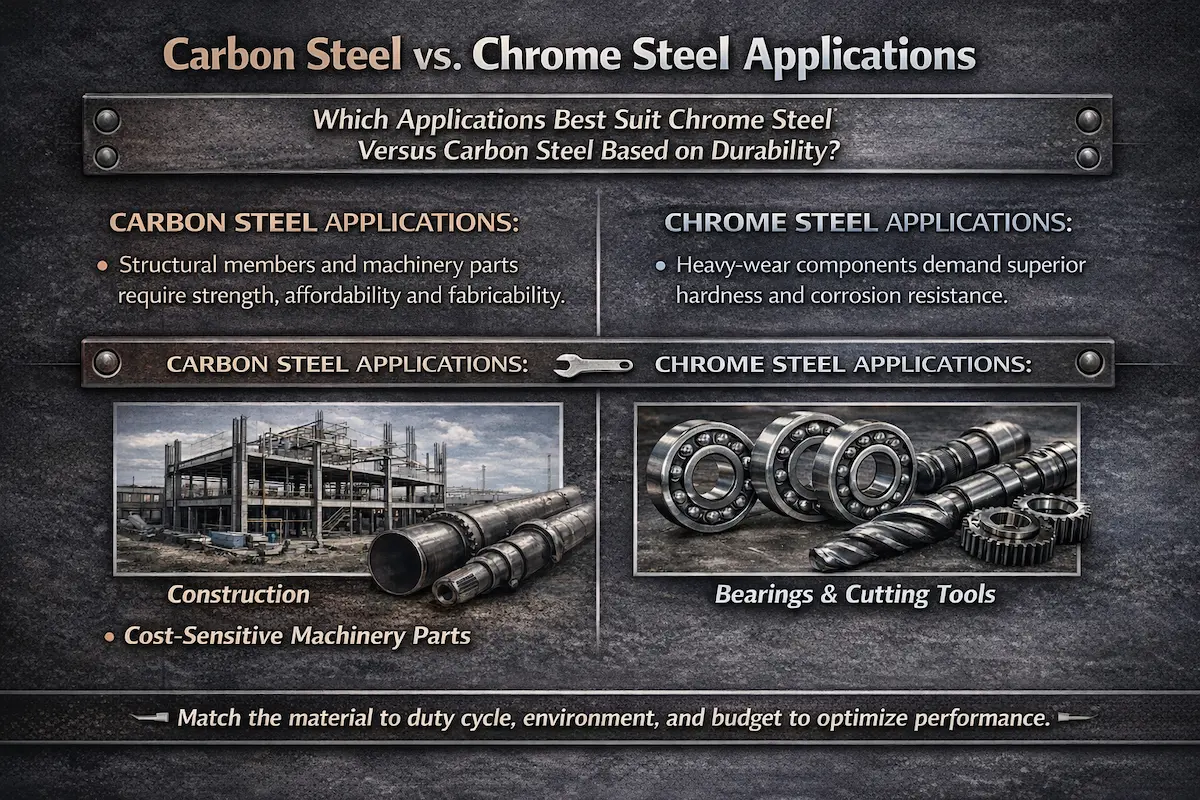
Which Applications Best Suit Chrome Steel Versus Carbon Steel Based on Durability?
Application requirements dictate the best choice.
- Chrome Steel Applications: Parts subject to heavy wear—gears, bearings, and cutting tools—benefit from chrome steel’s hardness and corrosion tolerance.
- Carbon Steel Applications: Structural beams, reinforcements, and cost-sensitive machinery parts leverage carbon steel’s strength and affordability.
Match the material to duty cycle, environment, and budget to optimize performance and lifecycle cost.
What Industrial and Commercial Uses Highlight Chrome Steel Advantages?
Chrome steel is commonly chosen where hardness and wear resistance matter.
- Automotive Parts: Components such as crankshafts and camshafts gain extended life from chrome steel’s wear properties.
- Manufacturing Tools: Cutting tools and dies maintain edge life and resist abrasive wear.
These use cases illustrate chrome steel’s value in performance-critical applications.
Where Is Carbon Steel Preferred Due to Its Strength and Cost-Effectiveness?
Carbon steel is often selected where structural strength and lower cost are priorities.
- Furniture Manufacturing: Frames and supports use carbon steel for its strength-to-cost advantages.
- Construction: Beams and reinforcements rely on carbon steel for dependable structural performance at a lower price point than chrome alloys.
That balance of performance and affordability explains carbon steel’s widespread use.
How Can Maintenance and Environmental Factors Influence the Durability of Both Steel Types?
Maintenance practices and operating environment strongly affect service life. Regular cleaning and protective coatings extend carbon steel life by preventing corrosion. Environmental exposure—humidity, salt, and chemicals—can accelerate degradation for both materials.
Chrome steel is better suited to harsher environments because of its inherent corrosion resistance, while carbon steel generally needs extra protection to achieve similar longevity.
What Are Recommended Maintenance Tips for Extending Carbon Steel Service Life?
To prolong carbon steel performance, follow these practical steps:
- Regular Inspections: Identify corrosion and wear early so you can address issues before they grow.
- Protective Coatings: Apply paint, galvanization, or other finishes to block moisture and corrosives.
- Proper Storage: Store components in dry, ventilated areas to minimize exposure to humidity.
Consistent preventive maintenance preserves integrity and reduces long-term costs.
How Do Environmental Conditions Impact Corrosion and Wear on Chrome and Carbon Steel?
Conditions such as moisture, temperature cycling, and chemical exposure accelerate both corrosion and wear. Chrome steel’s corrosion resistance helps it perform more reliably in aggressive settings.
Carbon steel’s greater rust risk means protective measures are critical in challenging environments. Evaluate operating conditions when specifying material.
What Are the Latest Industry Standards and Innovations Affecting Steel Durability?
Recent advances in alloy design and thermal processing have raised durability standards. Improved alloying strategies and tailored heat treatments produce steels with better wear, strength, and corrosion performance.
These innovations respond to industry demand for materials that deliver longer service life and better performance in demanding applications.
How Do ASTM and ISO Standards Define Durability Metrics for Chrome and Carbon Steel?
ASTM and ISO standards provide standardized test methods and acceptance criteria for mechanical properties, corrosion resistance, and performance. Adhering to these standards ensures consistent, reliable materials suitable for specified applications.
Manufacturers and specifiers rely on these benchmarks to verify material behavior and conform to industry expectations.
What Emerging Alloy Technologies Improve Steel Durability and Sustainability?
New alloying approaches and processing techniques are producing more durable and sustainable steels. Developments include lower-impact alloy chemistries, optimized heat treatments, and composite materials that enhance performance while reducing environmental footprint.
These trends support longer-lasting components and align steel production with broader sustainability goals.
Frequently Asked Questions
What makes chrome steel more corrosion resistant than carbon steel?
Chrome steel contains chromium, which forms a thin, protective oxide layer on the surface that slows rust and corrosion. Carbon steel lacks this passive layer and corrodes more readily unless protected by coatings or treatments.
How does carbon content affect the hardness of carbon steel?
Higher carbon content raises hardness and strength but lowers ductility, increasing brittleness. Low carbon steels are softer and easier to form; high carbon steels are harder and suited to tools and wear-resistant parts.
Can heat treatment improve the durability of both chrome and carbon steel?
Yes. Heat treatment modifies microstructure to enhance properties: in chrome steel it typically increases hardness and tensile strength for better wear resistance; in carbon steel it can improve toughness and ductility to resist impact and fatigue.
What are common applications for chrome steel versus carbon steel?
Chrome steel is common in automotive components, cutting tools, and bearings where wear resistance is critical. Carbon steel is widely used in construction, furniture frames, and general machinery where strength and cost-effectiveness matter.
How should carbon steel be maintained to extend its service life?
Inspect regularly for corrosion, apply protective coatings like paint or galvanization, and store parts in dry, ventilated spaces. These steps minimize rust and extend working life.