
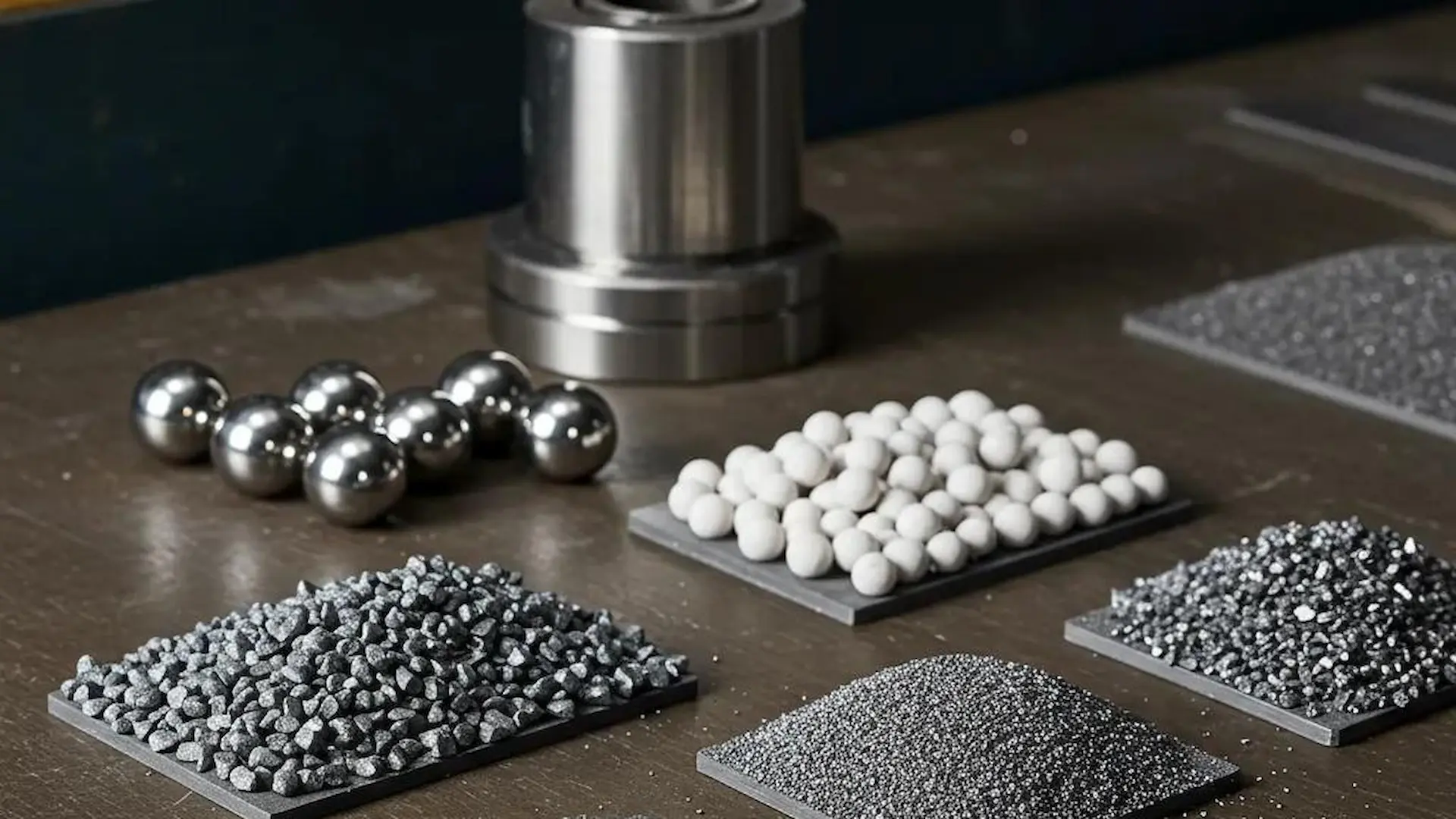
Selecting the right grinding media material can cut milling costs by up to 30% while boosting throughput and ensuring consistent particle-size distribution. This guide unlocks the critical factors—material properties, shapes, performance metrics, and industry applications—that influence your grinding efficiency. You will learn how steel, ceramic, carbide, and specialty media compare, when to engage experts at STR Industries for custom solutions, and which media deliver optimal results across mining, ceramics, pharmaceuticals, and advanced-materials processing.
What Is Grinding Media and Why Is Material Selection Critical?
Grinding media are engineered particles that reduce material size through impact and attrition in mills. Choosing the optimal material composition—from carbon steel to zirconia—directly affects energy consumption, wear rates, contamination risk, and final product purity. Understanding these relationships establishes a foundation for pinpointing the best media for your process demands.
A Review of the Grinding Media in Ball Mills for Mineral Processing
Research indicates that the proper selection of grinding media is crucial for optimizing energy consumption, controlling product size, and reducing overall grinding costs in ball mills. Effective grinding media should possess high hardness, fracture toughness, wear resistance, and corrosion resistance to ensure a long service life and cost efficiency.
This review paper provides comprehensive support for the article’s claims regarding the critical role of material selection, key properties affecting performance, and the economic benefits of optimal grinding media.
What Are the Different Types of Grinding Media?
Grinding media appear in various forms to suit diverse milling strategies:
- Balls deliver high-impact energy for coarse and fine grinding.
- Beads ensure uniform dispersion in pigment and paint milling.
- Cylinders offer extended contact length in slurry applications.
- Cylpebs combine impact and attrition for gentle particle reduction.
Each shape influences milling dynamics and downstream separation, preparing us to examine key performance attributes next.
Which Key Properties Affect Grinding Media Performance?
Material properties dictate both milling efficiency and operational cost. The table below summarizes core attributes:
| Property | Role | Impact |
|---|---|---|
| Hardness | Resistance to surface deformation | Extends media life under abrasive conditions |
| Density | Mass per unit volume | Increases impact energy for high-throughput grinding |
| Wear Resistance | Ability to withstand mechanical and chemical wear | Reduces contamination and replacement frequency |
| Chemical Inertness | Resistance to reaction with feed material | Maintains product purity in sensitive industries |
| Toughness | Resistance to fracture under impact | Prevents media breakage and mill damage |
High-hardness, high-density media improve energy transfer and reduce downtime, leading us to explore how shape influences these benefits.
How Do Grinding Media Shapes Influence Milling Efficiency?
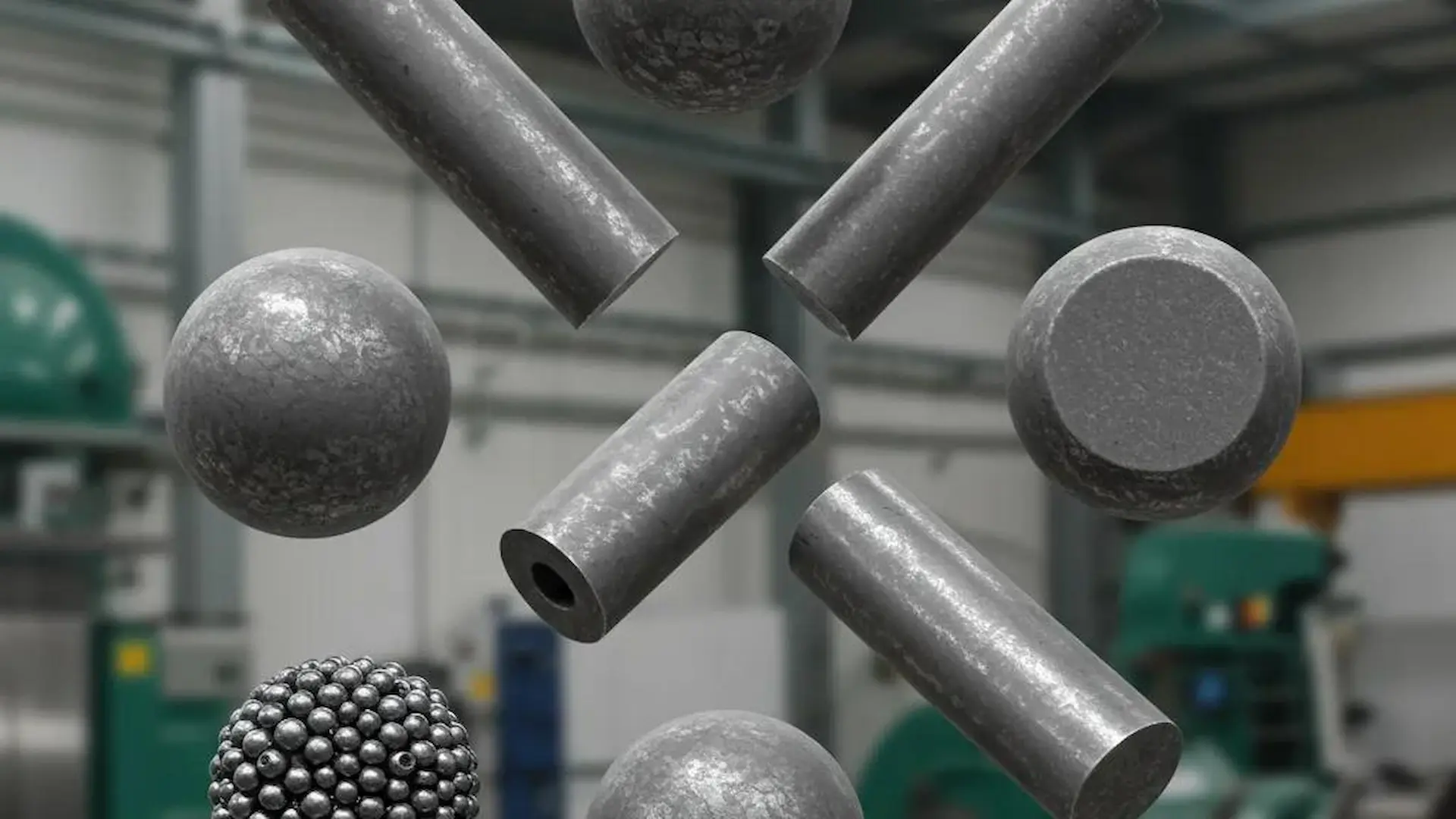
Shape determines contact mechanics and grinding kinetics.
- Spherical balls concentrate impact at single contact points for rapid coarsening.
- Cylindrical rods generate shear and abrasion along extended surfaces for uniform reduction.
- Beads in fine dispersers promote continuous attrition ideal for colloidal suspensions.
- Cylpebs combine impact and attrition to minimize overgrinding of fragile materials.
Matching shape to process demands optimizes energy use and particle-size control, setting the stage for comparing material families in depth.
How Do Grinding Media Materials Compare: Metallic vs. Ceramic and Others?
Grinding media selection hinges on balancing cost, durability, contamination risk, and milling goals. Metallic media excel in heavy-duty grinding but can introduce iron contamination. Ceramic and carbide media resist wear and chemical reaction, preserving product purity at higher initial cost. Specialty glass and plastic beads serve niche applications with minimal abrasion and low density. For more information on this topic, you can refer to how to select the right grinding media.
What Are the Characteristics of Steel Grinding Balls?
Steel grinding balls offer strong impact resistance and cost efficiency.
- High-carbon steel media deliver robust wear resistance in mineral processing.
- Chrome steel balls combine hardness and toughness for cement and slurry mills.
- Stainless steel balls resist corrosion in wet and acidic environments.
Pros: affordable, durable, widely available. Cons: potential iron contamination, moderate wear rates compared to advanced ceramics.
Just a crush? Contamination of archaeological samples by different grinding media
A study investigating various grinding methods found that different crushing media, including stainless steel, tungsten carbide, alumina, and zirconia ceramics, can introduce significant trace element contamination into samples during the grinding process. This highlights the necessity for careful selection of sample preparation methods to maintain product purity.
This research directly supports the article’s discussion on contamination risks associated with different grinding media materials and the importance of high-purity media for sensitive applications.
What Makes Alumina Grinding Media Ideal for High-Purity Applications?
Alumina grinding media provides exceptional wear resistance and chemical stability for ultra-clean milling.
- Purity levels above 92 % Al₂O₃ prevent metal ion leaching.
- Mohs hardness of 9 maintains sphericity under high stresses.
- Specific gravity around 3.7 g/cm³ balances impact energy with reduced contamination risk.
This inert ceramic minimizes iron pickup in pharmaceuticals, food, and high-performance coatings.
How Does Tungsten Carbide Grinding Media Excel in Ultra-Fine Grinding?
Tungsten carbide media combine extreme hardness and density for the most demanding milling tasks.
- WC content above 90 % yields Mohs hardness near diamond.
- Density of 14.6 g/cm³ maximizes impact force, driving ultrafine particle size.
- Exceptional wear resistance extends service life by up to five times compared to ceramics.
High-density impact media reduce milling cycles and ensure consistent micron-level distribution.
What Are the Advantages of Silicon Carbide and Silicon Nitride Grinding Media?
Silicon-based ceramics deliver specialized benefits:
| Material | Hardness (Mohs) | Density (g/cm³) | Key Benefit | Ideal Use |
|---|---|---|---|---|
| Silicon Carbide (SiC) | 9 | 3.1 | Thermal shock resistance | High-temperature, abrasive loads |
| Silicon Nitride (Si₃N₄) | 8.5 | 3.2 | High strength and toughness | Advanced ceramic and electronic processes |
Silicon carbide withstands thermal cycling, while silicon nitride excels in fatigue resistance and mill life for precision applications.
When Should You Use Zirconia, Glass, or Plastic Grinding Media?
Select niche media when specific process constraints apply:
- Zirconia (ZrO₂) offers high density (6.0 g/cm³) and fracture toughness for ultra-clean, heavy-duty milling.
- Glass beads provide chemical inertness and gentle abrasion for fine dispersion in inks and paints.
- Plastic beads minimize impact energy and eliminate metal contamination for sensitive formulations.
Matching media to chemical compatibility and desired fineness prevents overgrinding and contamination.
How to Select the Right Grinding Media for Your Industrial Application?
Choosing optimal media involves a four-step evaluation of feed characteristics, performance needs, economic factors, and expert guidance.
How Do Material Properties and Milling Needs Influence Media Choice?
Evaluate each processing requirement:
- Feed material hardness dictates required media hardness.
- Target particle size influences media density and shape.
- Mill type (ball, attritor, bead mill) determines preferred media geometry.
- Dry or wet process guides chemical compatibility and corrosion resistance.
Mapping these variables ensures alignment between media attributes and operational demands.
What Performance Factors Should You Consider?
Focus on key metrics that affect outcomes:
- Hardness and toughness for wear life
- Density for impact energy and throughput
- Chemical inertness to prevent contamination
- Surface finish of milled product for downstream processing
Balancing these factors drives consistent quality and reduces unplanned downtime.
How Do Cost and Longevity Impact Grinding Media Selection?
Cost of ownership depends on purchase price and service life:
| Factor | Consideration | Outcome |
|---|---|---|
| Initial Cost | Price per kilogram | Affects capital expenditure |
| Wear Rate | Material loss per ton milled | Determines replacement frequency |
| Effective Lifespan | Average operating hours before changeout | Influences total cost of ownership |
Investing in higher-performance media often lowers overall expense by extending intervals between replacements.
When Should You Consult Experts for Custom Grinding Media Solutions?
For specialized processes—such as pharmaceutical, aerospace, or advanced ceramics—partner with STR Industries’ technical team. Custom formulations, tailored diameter ranges (0.8 mm to 80 mm), and proprietary manufacturing methods deliver media that precisely match your contamination thresholds, throughput targets, and mill conditions.
What Are the Industry Applications and Benefits of Different Grinding Media?
Grinding media selection yields significant efficiency and quality improvements across sectors.
How Does Grinding Media Improve Mining and Mineral Processing?
High-chrome steel balls and tungsten carbide media sustain impact forces in ore reduction, delivering consistent grind rates and lower energy consumption. Enhanced wear resistance reduces media top-up frequency and contamination, boosting mineral recovery.
What Grinding Media Are Best for Ceramics, Glass, and Coatings?
Ceramic media—like alumina and zirconia—provide chemical inertness essential for pigment dispersion and fine coatings. Their low abrasion prevents scratching of delicate substrates and maintains color fidelity in high-value products.
Which Media Suit Pharmaceuticals, Food, and Electronics Industries?
Use high-purity alumina or zirconia grinding media to eliminate metal leaching and ensure compliance with regulatory standards. Ceramic beads achieve uniform particle size distributions critical for drug formulation, food ingredients, and electronic pastes.
How Do Advanced Materials Benefit from Specialized Grinding Media?
Battery materials, advanced composites, and nanomaterials require ultrafine particle sizes achievable with tungsten carbide and silicon nitride media. These high-density, high-hardness particles enable precise control over particle morphology and surface properties.
Why Choose STR Industries for Your Grinding Media Needs?
STR Industries brings over three decades of expertise in precision media manufacturing.
What Quality Standards and Certifications Ensure STR Industries’ Reliability?
TS 16949 certification guarantees stringent quality control and traceability throughout the production process. ISO-aligned procedures ensure each batch of media meets exacting hardness, sphericity, and chemical purity specifications.
How Does STR Industries Offer Custom Solutions Across Materials and Sizes?
STR Industries manufactures grinding media in 0.8 mm–80 mm diameters across steel, ceramic, carbide, glass, and plastic. Proprietary processes enable tailored material compositions, surface finishes, and tolerance classes to meet unique process requirements.
What Are STR Industries’ Production Capacities and Industry Expertise?
With over 400 metric tons of precision media produced monthly, STR Industries serves automotive, aerospace, medical, mining, and specialty-materials customers worldwide. Extensive application knowledge supports rapid development of optimized grinding solutions.
What Are Common Challenges in Grinding Media Selection and How to Solve Them?
Selecting media involves navigating contamination, wear, efficiency, and cost trade-offs.
How Can You Reduce Contamination Risks with High-Purity Media?
Using alumina and zirconia grinding media prevents metal ion pickup in critical applications. Chemically inert surfaces eliminate unwanted reactions, ensuring product integrity for pharmaceuticals and high-performance ceramics.
What Strategies Improve Grinding Efficiency and Media Lifespan?
- Select high-hardness, high-density media to maximize impact energy
- Optimize media charge and mill speed for uniform attrition
- Implement regular sampling and wear-rate monitoring to schedule timely media top-ups
Optimization of the high energy ball-milling: Modeling and parametric study
High-energy ball milling efficiency can be optimized by carefully considering key parameters such as ball size distribution and the ball-to-powder ratio. These factors significantly influence the milling process, affecting aspects like mill power draw, charge motion, and the mechanism of particle breakage.
This study reinforces the article’s section on optimizing grinding efficiency by highlighting specific parameters that influence the performance and outcomes of high-energy milling processes.
How to Balance Cost-Effectiveness with Performance Needs?
Evaluate total cost of ownership by comparing inexpensive steel balls against longer-lasting carbide or ceramic media. Higher initial investment often yields lower lifetime expense through reduced downtime and fewer changeouts.
Where Can You Find Detailed Grinding Media Material Specifications and Comparison Tables?
STR Industries provides in-depth resources and interactive tools for material selection and performance evaluation.
How to Use Comparison Tables to Evaluate Hardness, Density, and Wear Rates?
Identify key property thresholds—hardness above 8 Mohs, density ranges from 3 g/cm³ to 15 g/cm³—and match them to your process demands. Use tabulated data to quickly eliminate media that fail to meet abrasion or contamination requirements.
What Visual Tools Help in Selecting the Best Grinding Media?
Infographics, decision trees, and performance charts illustrate trade-offs between impact energy, wear life, and purity. These visuals guide engineers through a step-by-step selection process based on feed hardness, mill type, and product specifications.
How to Access STR Industries’ Grinding Media Product Pages and Resources?
Explore detailed material sheets, specification tables, and application notes on the STR Industries website. Technical bulletins and case studies demonstrate real-world results, and our support team is ready to assist with custom inquiries and sampling.
Striking the right balance of hardness, density, wear resistance, and chemical compatibility unlocks maximum milling efficiency and product quality. Contact STR Industries’ technical specialists to explore tailored grinding media solutions that meet your exact performance and purity requirements.
Frequently Asked Questions
What factors should I consider when selecting grinding media for my specific application?
When selecting grinding media, consider factors such as the hardness of the feed material, the desired particle size, the type of mill being used (e.g., ball mill, bead mill), and whether the process is dry or wet. Each of these factors influences the choice of media shape, density, and material composition. Additionally, evaluate the chemical compatibility of the media with the materials being processed to prevent contamination and ensure optimal performance.
How can I determine the right size of grinding media for my milling process?
The size of grinding media is crucial for effective milling. Generally, smaller media are used for fine grinding, while larger media are suitable for coarser applications. A good rule of thumb is to use media that is 1/3 the size of the target particle size. Conducting tests with different sizes can help identify the optimal media size for achieving the desired particle distribution and milling efficiency in your specific application.
What are the environmental impacts of using different types of grinding media?
The environmental impact of grinding media varies by material. For instance, ceramic and plastic media tend to have lower environmental footprints due to their inert nature and reduced risk of contamination. In contrast, metallic media can introduce metal ions into the environment, which may be harmful. Additionally, the production processes for different media types can vary in energy consumption and waste generation, making it essential to consider sustainability when selecting grinding media.
How does the choice of grinding media affect the final product quality?
The choice of grinding media significantly impacts the final product quality. High-purity media, such as alumina or zirconia, minimize contamination and ensure consistent particle size distribution, which is critical in industries like pharmaceuticals and food processing. Conversely, using lower-quality media can lead to unwanted impurities and variations in product characteristics, ultimately affecting performance and compliance with industry standards.
What maintenance practices can extend the lifespan of grinding media?
To extend the lifespan of grinding media, implement regular maintenance practices such as monitoring wear rates, optimizing mill speed, and ensuring proper media charge levels. Additionally, conducting routine inspections for signs of wear or damage can help identify issues before they lead to media failure. Proper cleaning and storage of media when not in use can also prevent contamination and degradation, ensuring consistent performance over time.
Are there any innovations in grinding media technology that I should be aware of?
Yes, recent innovations in grinding media technology include the development of advanced composite materials that enhance wear resistance and reduce contamination risks. Additionally, smart media with embedded sensors are being explored to monitor performance in real-time, allowing for more precise adjustments during milling processes. These advancements aim to improve efficiency, reduce costs, and enhance the overall quality of the final product.
How can I access technical support for selecting the right grinding media?
For technical support in selecting the right grinding media, you can reach out to manufacturers like STR Industries, which offer expert guidance tailored to your specific application needs. They provide resources such as material specifications, performance evaluations, and case studies. Additionally, consulting with industry experts or technical representatives can help you navigate the complexities of media selection and ensure optimal outcomes for your milling processes.
Request for Quote