
In the realm of industrial manufacturing, the choice of grinding media is crucial for achieving optimal performance in milling processes. Grinding media, which includes materials like steel and ceramic, plays a significant role in the efficiency and effectiveness of grinding operations. This article delves into the top grinding media suppliers, focusing on their offerings, the types of grinding media available, and how to select the right products for specific engineering needs. Readers will gain insights into the various types of grinding media, their applications, and the latest trends in the industry. By understanding these elements, manufacturers can make informed decisions that enhance productivity and reduce costs.
Which Types of Grinding Media Do Leading Suppliers Offer?
Leading suppliers provide a diverse range of grinding media tailored to various industrial applications. The primary types include steel grinding balls, ceramic media, and chrome steel products, each with unique properties and benefits. Understanding these types is essential for selecting the right media for specific milling processes.
Steel Grinding Balls: Material Properties and Applications
Steel grinding balls are widely used in various industries due to their durability and effectiveness in grinding. These balls are typically made from forged steel or high carbon steel, which provides excellent hardness and wear resistance. Their applications span across sectors such as mining, cement, and chemical processing, where they are essential for achieving fine particle sizes. The impact of steel grinding balls on milling efficiency is significant, as they facilitate the breakdown of materials while minimizing wear on milling equipment.
Further research highlights the importance of understanding and optimizing steel grinding media wear in ball mills to enhance overall grinding performance.
Optimizing Steel Grinding Media Wear in Ball Mills
Ball mills, characteristic of the mineral processing industry, are used to reduce product from one size distribution to another. Wear is associated with comminution mechanisms found in the ball charge which in turn affects grinding performance. In this work, ball mill wear, as a function of mill operating variables, is determined using a mathematical wear model.
The wear model incorporates the energy dissipated in crushing, tumbling and grinding zones of the charge profile with adhesive and abrasive wear descriptions. This model has been added to a ball charge motion model allowing the simulation of mill wear rates as well as ball mill element wear and its affect on grinding performance. Simulation results presented show the interaction between wear and grinding performance. Further work is necessary to validate charge and wear model results using industrial data.
Ceramic and Chrome Steel Grinding Media: Benefits and Use Cases
Ceramic and chrome steel grinding media offer distinct advantages in specific applications. Ceramic media is known for its high resistance to wear, making it ideal for sensitive applications such as pharmaceuticals and food processing. Chrome steel media, on the other hand, provides higher density durability and is suitable for high-impact grinding environments. These materials ensure that the grinding process is efficient while maintaining the integrity of the products being processed.
How to Select the Right Grinding Media Size and Specifications?
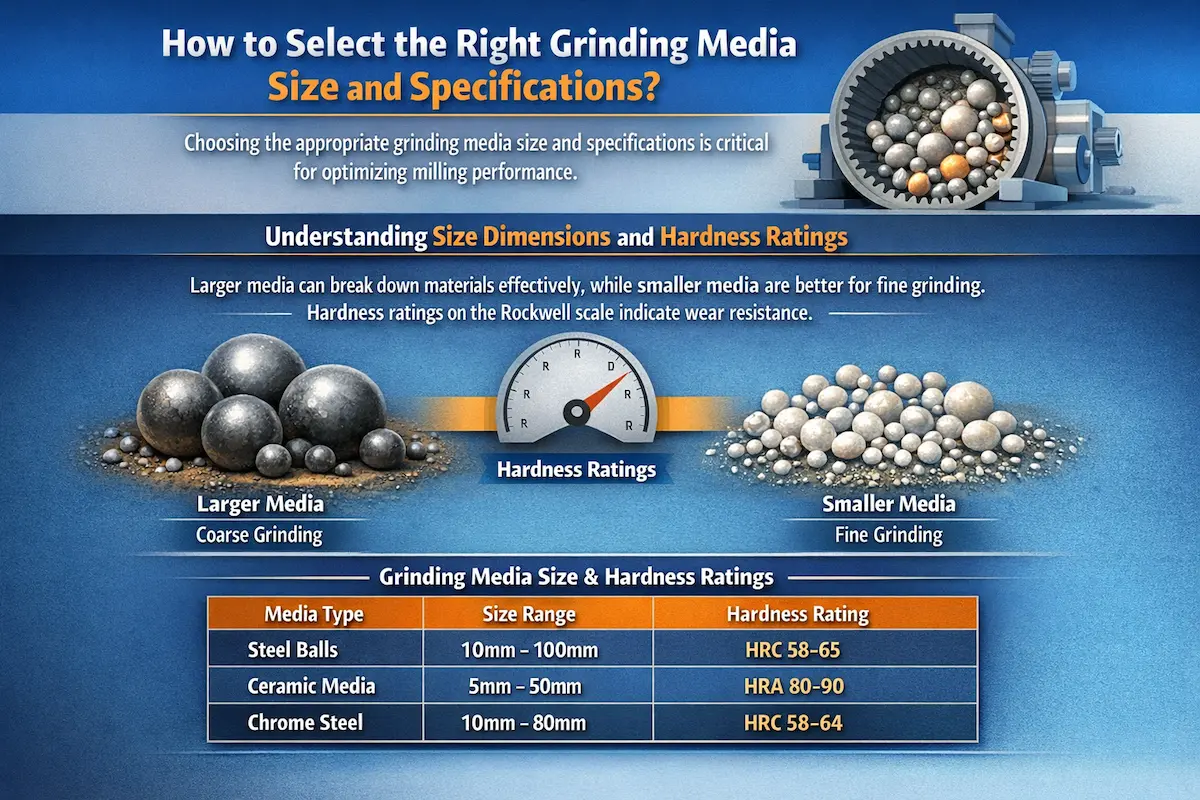
Choosing the appropriate grinding media size and specifications is critical for optimizing milling performance. Factors such as material characteristics, desired particle size, and cost considerations play a vital role in this selection process.
Understanding Size Dimensions and Hardness Ratings
The size dimensions and hardness ratings of grinding media significantly influence their performance. Larger media can break down materials more effectively, while smaller media may be better suited for fine grinding. Hardness ratings, typically measured on the Rockwell scale, indicate the media’s resistance to wear and deformation. Selecting the right combination of size and hardness is essential for achieving optimal milling efficiency.
| Media Type | Size Range | Hardness Rating |
|---|---|---|
| Steel Balls | 10mm – 100mm | HRC 58-65 |
| Ceramic Media | 5mm – 50mm | HRA 80-90 |
| Chrome Steel | 10mm – 80mm | HRC 58-64 |
This table illustrates the various size ranges and hardness ratings for different types of grinding media, helping manufacturers make informed decisions based on their specific needs.
Wear Resistance and Performance Metrics for Optimal Milling Efficiency
Wear resistance is a critical factor in the performance of grinding media. Metrics such as media density, wear rates, and impact resistance directly affect the efficiency of the milling process. High-density media typically offer better grinding performance, while lower wear rates contribute to reduced operational costs. Understanding these performance metrics allows manufacturers to select media that not only meets their grinding requirements but also enhances overall productivity.
What Custom Grinding Media Solutions Do Top Suppliers Provide for Engineering Projects?
Top suppliers often offer custom grinding media solutions tailored to the specific needs of engineering projects. These solutions can include specialized material types and manufacturing processes designed to meet unique operational requirements.
Tailored Material Types and Manufacturing Processes
Custom grinding media can be developed using various materials, including specialized alloys and composites. Suppliers may employ advanced manufacturing processes such as forging, casting, or sintering to create media that meets precise specifications. This customization ensures that the grinding media performs optimally in specific applications, enhancing the overall efficiency of the milling process.
This commitment to customization extends to specific industrial needs, as evidenced by research into developing high-wear grinding media for sectors like the cement industry.
Developing High-Wear Grinding Media for Cement Industry
This research focuses on developing grinding media balls using locally available materials, particularly aimed at reducing dependence on imported products in Bangladesh’s cement industry. It involves the collection and characterization of foreign grinding media balls, leading to the determination of optimal compositions for locally produced balls. High chromium cast iron has been identified as a suitable material due to its considerable wear resistance, and after processing, the as-cast samples assessed for properties like hardness and wear resistance showed satisfactory results aligning closely with those of imported products.
Development of grinding media balls using locally available materials, T Rahman, 2010
Engineering Project Support and Quality Certifications
Leading suppliers provide engineering project support, including assistance with media selection and application optimization. Quality certifications, such as ISO 9001, ensure that the grinding media meets industry requirements for performance and safety. This support is crucial for manufacturers looking to implement effective grinding solutions in their operations.
Where Are the Leading Industrial Grinding Media Suppliers Located?
The geographical distribution of grinding media suppliers varies, with key players located in regions known for industrial manufacturing. Understanding the location of these suppliers can help businesses identify potential partners for their grinding media needs.
Global and Regional Supplier Profiles
Leading suppliers are often concentrated in industrial hubs around the world. For instance, regions with a strong mining or manufacturing presence typically host several grinding media manufacturers. These suppliers offer a range of products and services tailored to the needs of local industries, ensuring that businesses have access to high-quality grinding media.
Abrasive Grinding Media Distributors and Price List Insights
Pricing strategies for grinding media can vary significantly based on material type, size, and supplier. Understanding the price ranges for different types of grinding media helps manufacturers budget effectively for their operations. Typical price ranges for various media types include:
- Steel Grinding Balls: $1,200 – $2,500 per ton
- Ceramic Media: $2,500 – $4,500 per ton
- Chrome Steel Media: $1,800 – $3,200 per ton
These insights into pricing can assist manufacturers in making cost-effective decisions when sourcing grinding media.
Indeed, the financial implications of grinding media are substantial, with costs often representing a significant portion of total comminution expenses in mineral processing.
Grinding Media Costs & Efficiency in Mineral Processing
One of the basic operations in minerals processing is grinding of the ore to the point where valuable minerals are liberated from the host rock. Subsequent operations then separate the desirable minerals from the gangue or waste. The grinding balls form the major portion of the consumable costs, and can be as high as 40% to 45% of the total costs of communition. Grinding is essential to the efficient separation of minerals, is the key to good minerals processing.
To produce clean concentrates it is necessary to grind the ore fine enough to liberate the minerals, but overgrinding inflates energy costs and can lead to the production of untreatable fine ‘slimes’ particles1. Grinding is therefore a compromise between recovering clean highgrade concentrates, and minimising operating costs and fines losses. Annually, large tonnages of ferrous grinding media are consumed around the globe, costing several million dollars2. Highly abrasive ores, such as those in the gold industryGrinding media quality assurance for the comminution of gold ores, 2009
What Are the Latest Industry Trends and Innovations in Grinding Media?
The grinding media industry is continually evolving, with new trends and innovations emerging to enhance performance and sustainability. Staying informed about these developments is essential for manufacturers looking to maintain a competitive edge.
Technological Advances in Material Science and Sustainability
Recent advancements in material science have led to the development of more efficient and sustainable grinding media. Innovations such as eco-friendly materials and improved manufacturing processes contribute to reduced environmental impact while maintaining high performance. These advancements are crucial as industries increasingly prioritize sustainability in their operations.
Market Growth Projections and Demand from 2024 to 2026
Market growth projections indicate a steady increase in demand for grinding media, driven by expanding industries such as mining, construction, and manufacturing. From 2024 to 2026, the global grinding media market is expected to grow at a compound annual growth rate (CAGR) of approximately 4.5% to 5%. This growth presents opportunities for suppliers to innovate and expand their product offerings to meet the evolving needs of the market.
For more information on specific applications, consider exploring the characteristics of chrome steel.