
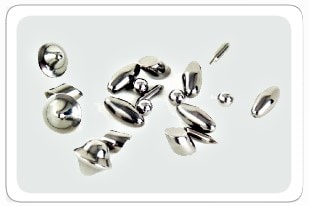
Choosing the appropriate burnishing media is essential for achieving the desired surface finish, shine, and texture during the burnishing process. Burnishing is a mass finishing technique used to enhance surface properties through mechanical action. The right media selection depends on the material, finish goal, and equipment used.
Common Types of Burnishing Media
- Steel Media: Steel balls and pins are versatile, durable, and effective across a variety of materials—ideal for general-purpose applications.
- Stainless Steel Media: Offers excellent corrosion resistance, making it suitable for stainless steel parts and applications requiring contamination-free finishes.
- Ceramic Media: Ceramic media provides precision finishing on delicate components without excessive material removal. Available in various shapes and sizes.
- Plastic Media: Plastic options like polyamide or polyester are gentle on softer parts and provide a smooth finish with minimal risk of damage.
- Porcelain Media: Ideal for fine finishing and high-gloss polishing across a wide range of materials.
- Dense Media: Heavier options such as steel balls or stainless pins deliver more aggressive action—great for deburring and surface improvement.
- Porcupine Media: This pointed plastic media reaches intricate geometries and ensures complete, uniform coverage.
- Dry Media: Corn cob, walnut shell, and other dry media types are used in dry burnishing. They help polish while absorbing moisture.
Factors to Consider When Choosing Burnishing Media
- Material Compatibility: Prevent contamination or reaction with the parts being burnished.
- Desired Finish: Consider the level of smoothness, gloss, or texture you want to achieve.
- Part Size & Shape: Use media that can reach every surface, especially internal features or small recesses.
- Equipment Compatibility: Make sure the media works with your tumblers or vibratory systems.
- Processing Time: Different materials and sizes impact the total time required.
- Cost Efficiency: Evaluate durability and performance vs. cost for long-term use.
Burnishing Media Solutions by STR Industries
STR Industries offers expert guidance in selecting the most effective media for your application. Whether you’re polishing, deburring, or finishing precision parts, our team can help you get the results you need.
Contact us today to speak with a burnishing media specialist or request a quote.
Related reading: The Science Behind Burnishing Media | Vibratory Burnishing Explained
Frequently Asked Questions
What types of burnishing media are available?
Common burnishing media include steel balls and pins, stainless steel media, ceramic media, plastic media such as polyamide or polyester, porcelain media, dense media like steel balls or stainless pins, pointed plastic porcupine media, and dry media such as corn cob and walnut shell for dry burnishing.
Which burnishing media is best for delicate or soft parts?
Ceramic media provides precision finishing on delicate components without excessive material removal. Plastic media such as polyamide or polyester is gentle on softer parts and provides a smooth finish with minimal risk of damage. Porcupine media reaches intricate geometries for uniform coverage.
What factors should I consider when choosing burnishing media?
Consider material compatibility to prevent contamination or reaction with the parts, the desired level of smoothness, gloss, or texture, part size and shape so the media reaches every surface, compatibility with your tumblers or vibratory systems, processing time, and durability and performance over long-term use.